After visiting the amazing Cefn Coch ‘Druid’s Stone Circle’, I made a decision. I’d set a challenge for myself to visit more of these fascinating ancient monuments in North Wales. Here is a list of stone circles in North Wales. I plan to visit each one over the next year. I will document the routes taken and create a post with all the details as I visit each one.

Meini Hirion – The Druid’s Circle
Penmaenmawr
There are actually a few stone circles to visit on this walk all in close proximity of eachother. The circle is really clear and if you’re lucky you’ll find wild Carneddau ponies happily meandering amidst the stones. This 6000 year old stone circle wasn’t actually built by the druids, although they definitely made use of it and it’s referred to widely as The Druid’s Circle.
Moel Ty Uchaf,
Llandrillo, Denbighshire
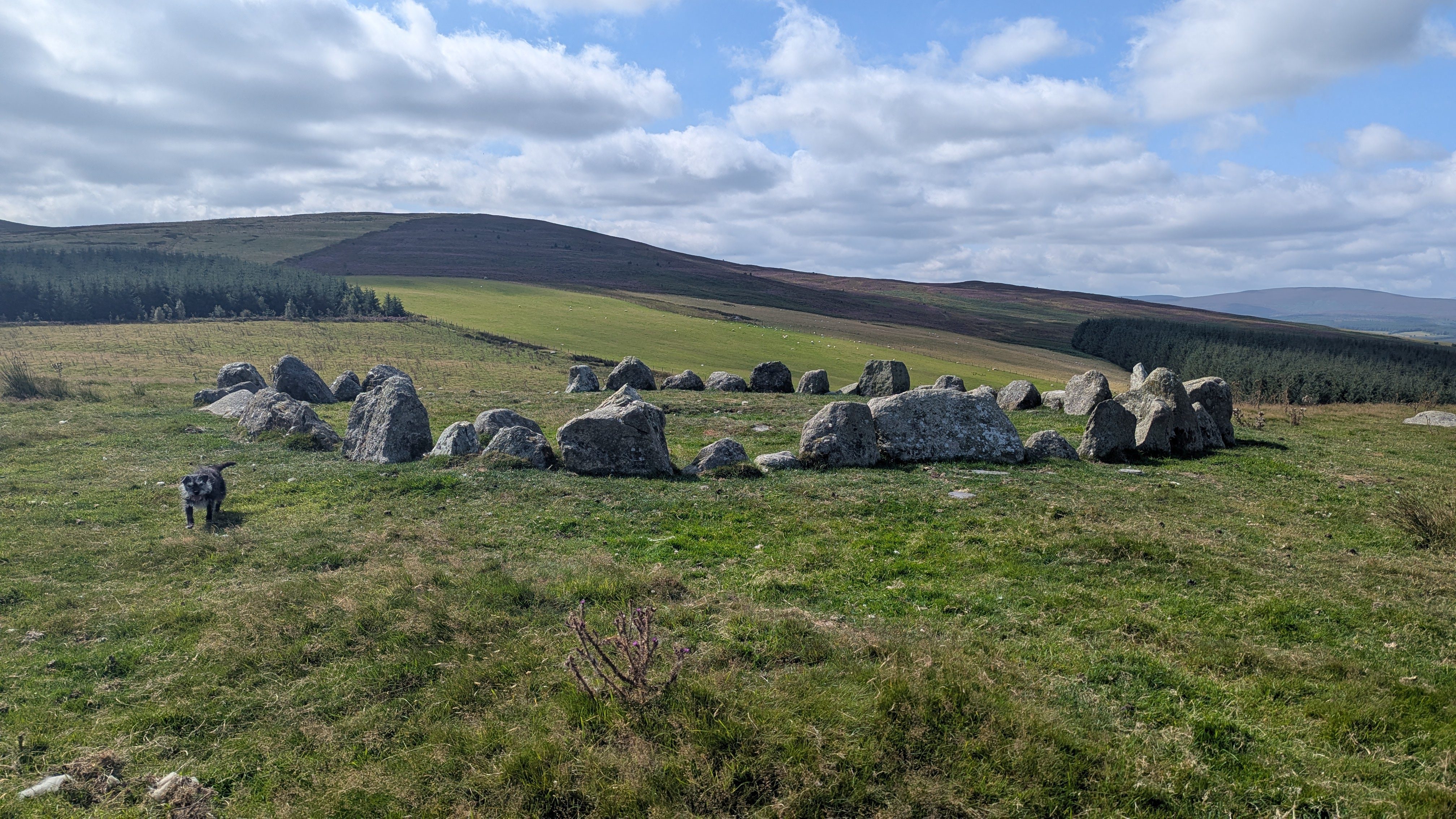
Moel Tŷ Uchaf is a peaceful and mysterious stone circle. It is likely a ring cairn. It is set in the hills near the village of Llandrillo in Denbighshire, north Wales. It’s made up of 41 stones arranged in a rough circle. There is a central stone box, called a cist. This cist may have once held human remains.
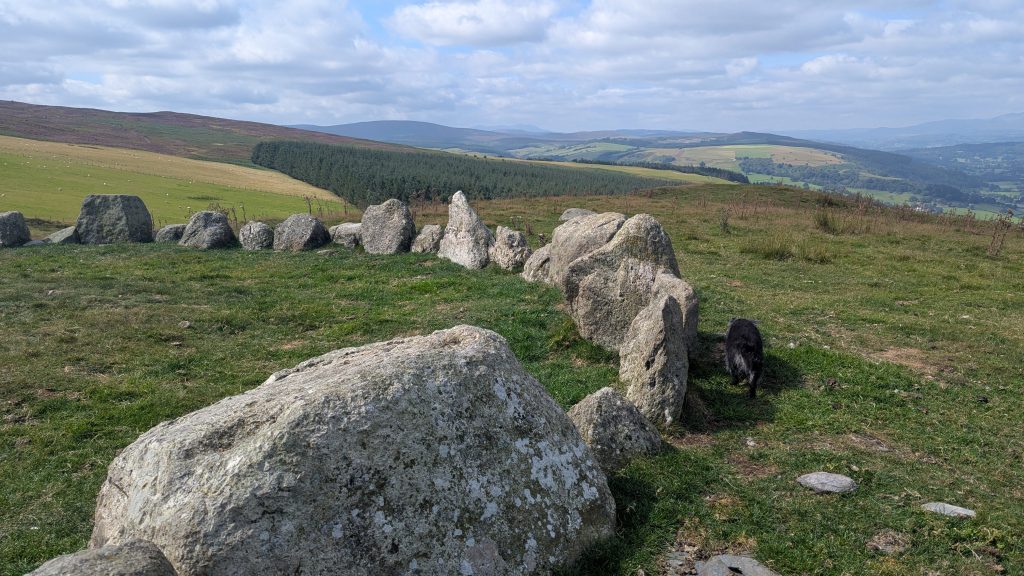
One lone stone stands slightly apart to the north-northeast, adding to the sense of mystery. The site’s elevated position offers sweeping views of the surrounding landscape, I can’t wait to visit this one.
Though its exact purpose remains unknown, Moel Tŷ Uchaf is thought to date back thousands of years. It possibly dates to the Bronze Age. It may have been used for rituals or burials.
Bryn Cader Faner
Talsarnau, Gwynedd

Bryn Cader Faner is one of the most eye-catching ancient sites in Wales. It’s a Bronze Age stone circle near the village of Talsarnau in Gwynedd. The circle is made up of sharp, thin stones which stick out from a low mound. The circle is about 9 metres wide and originally may have had around 30 stones, each about 2 metres tall.
The site is believed to be over 4,000 years old. In the 1800s, treasure hunters dug into the centre, likely looking for a grave. Sadly, before World War II, the British Army used the area for target practice, damaging many of the stones.
Its name is thought to mean “the hill of the throne with the flag”. A fitting name for such a dramatic place.
Bryn Celli Ddu
Anglesey

Bryn Celli Ddu is a fascinating ancient site. It is located on the North Welsh island of Anglesey, near the village of Llanddaniel Fab. Its name means “the mound in the dark grove”.
Visitors can walk through a stone passage into the burial chamber at the heart of the mound. Inside, there’s a strange upright stone and a copy of the “Pattern Stone,” which is carved with flowing, snake-like designs. The site is included in this list because it was once a stone circle. It may have been used to mark the summer solstice when the sun reaches its highest point in the sky.
Excavated in the late 1920s, Bryn Celli Ddu is now protected as a major Neolithic monument. It is cared for by Cadw, the Welsh heritage organisation.
Capel Garmon
Betws y Coed, Conwy


Capel Garmon is a rare and intriguing Neolithic tomb tucked away in north Wales. What makes it unusual is its location. Most tombs of this kind are found much further south, in the Cotswold-Severn area. Thus, its presence here is a bit of a mystery.
A 5-metre (16-foot) passage leads into a triple burial chamber. One of the rooms is covered with a large stone slab, called a capstone. Around the tomb, a ring of stones indicates the location of a huge earth mound. This mound was about 30 metres (100 feet) wide and once covered the entire structure.
Leave a Reply