There are some things you walk past for years without ever really noticing.
For me, marsh samphire was one of them.
I’d heard plenty about it when I lived in North Devon. It was becoming increasingly popular in restaurants, and I knew people who harvested it along the coast. I also knew it grew wild around much of Britain’s shoreline, but somehow I never realised just how much of it we had here in North Wales.

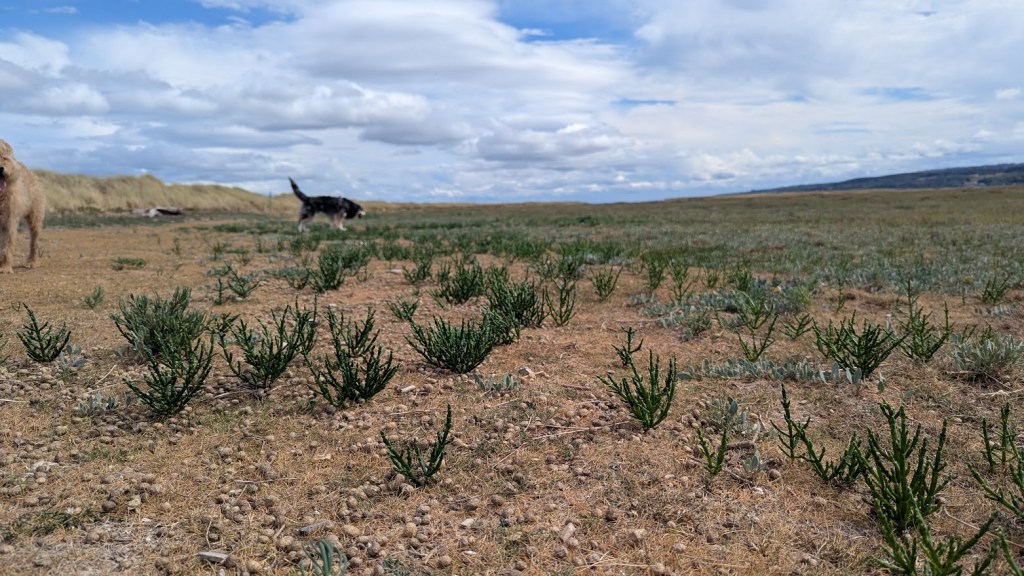
That changed a few years ago when I was out walking the North Wales coast with my brother. He suddenly stopped, looked across the salt marsh and said, “Wow, look at all that samphire.”
Once he’d pointed it out, I couldn’t believe I’d missed it. There were huge patches stretching across the marsh, growing happily in places I’d walked countless times before.
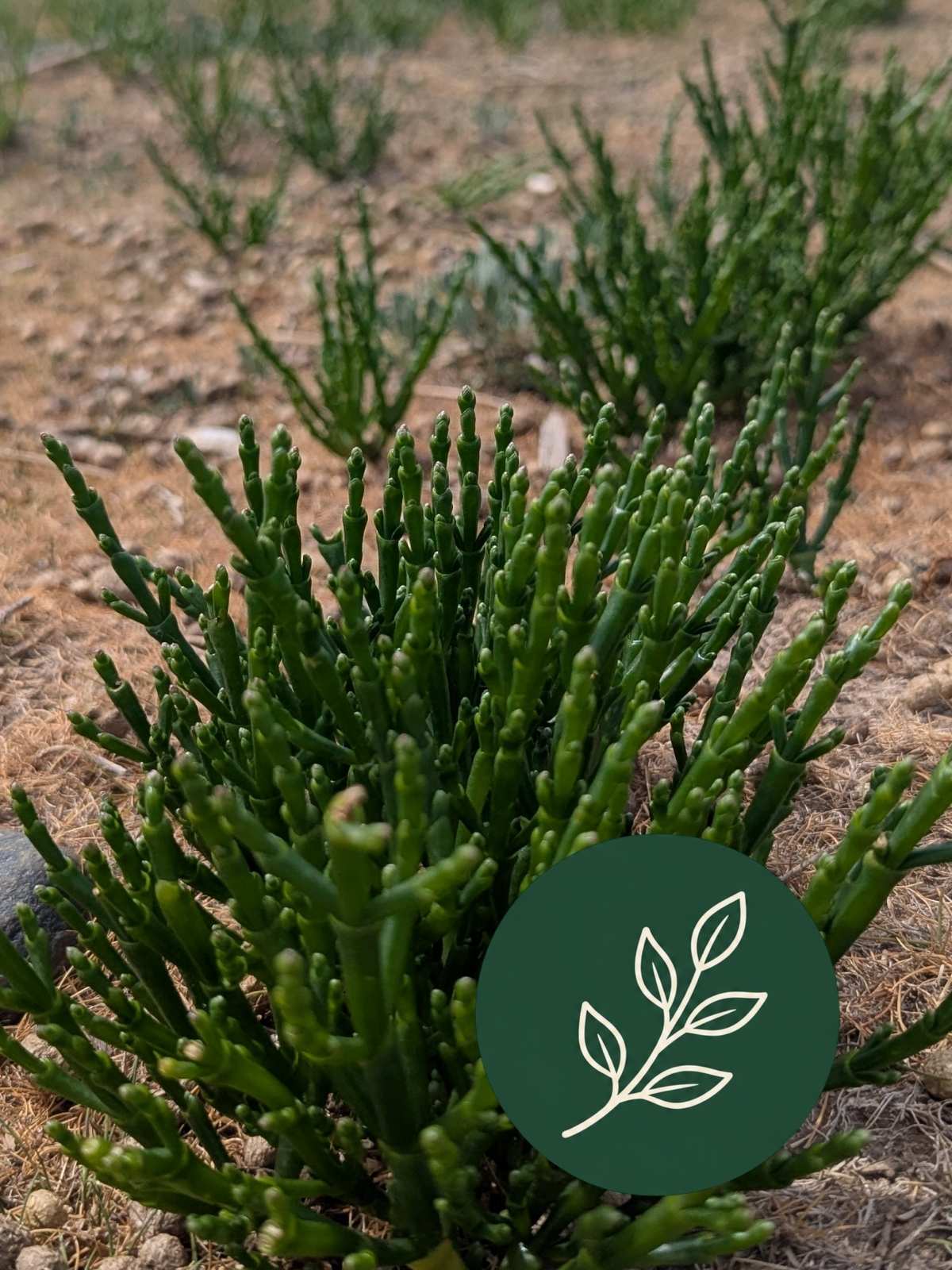
It’s really easy to identify thanks to its distinctive bright green, segmented stems that grow in dense patches across the salt marsh. Once you’ve learnt to recognise it, it’s impossible to miss.
Today, while out on my morning walk, some of the plants looked particularly fresh and juicy, so I decided it was finally time to bring a little home for dinner.
How to identify marsh samphire
It’s actually one of the easiest wild coastal plants to identify thanks to its green, fleshy stems, which are made up of lots of tiny segments. Growing in dense patches across salt marshes and tidal mudflats, it almost looks like miniature asparagus spears or tiny cacti.
Other names for marsh samphire
You might also hear marsh samphire referred to as:
- Glasswort – a historic name because its ash was once used in glassmaking.
- Marsh Glasswort – a descriptive common name.
- Sea Asparagus – often used by restaurants and greengrocers.
- Poor Man’s Asparagus – an old traditional nickname.
- Pickleweed – commonly used in North America.
Its scientific name is Salicornia europaea, although there are several closely related Salicornia species that are often simply referred to as marsh samphire.
Could you mistake it for another plant?
The good news is that marsh samphire is one of Britain’s easier wild edible plants to recognise, but there are a few coastal plants that beginners sometimes confuse it with.
Rock samphire (Crithmum maritimum) is probably the best known. Despite sharing the same common name, it’s a completely different plant. It grows on rocky cliffs and coastal walls rather than muddy salt marshes, and has fleshy, feathery leaves that look a little like fennel. It’s also edible so no need to worry.
How do they compare?
| Marsh Samphire | Rock Samphire |
|---|---|
| Grows on salt marshes and mudflats | Grows on rocky cliffs and sea walls |
| Scientific name: Salicornia spp. | Scientific name: Crithmum maritimum |
| Bright green, jointed stems | Fleshy, divided leaves, a bit like fennel |
| Crisp, juicy and naturally salty | More aromatic, slightly peppery, with hints of fennel and citrus |
| Often steamed or served with fish | Often pickled, or used in salads and with fish |
You may also come across sea purslane, which has soft, oval grey-green leaves, or annual sea-blite, which has narrow, pointed leaves rather than the distinctive segmented stems of marsh samphire. The young leaves have a mild, slightly salty flavour and can be eaten raw in salads or lightly cooked. It has been used traditionally as a coastal vegetable.
Three quick ways to recognise marsh samphire
If you’re unsure, look for these three clues:
✔️ It grows on salt marshes, estuaries and tidal mudflats, not rocky cliffs.
✔️ It has bright green, jointed, fleshy stems with no obvious leaves.
✔️ It grows in dense patches, often covering large areas of the marsh.
If a plant doesn’t match all three of those characteristics, it’s best to leave it where it is.
Top tip: Never eat a wild plant unless you’re completely confident you’ve identified it correctly. If you’re new to foraging, a good field guide or an experienced forager is invaluable.
Should you wash marsh samphire?
Yes, absolutely. Like any wild food, marsh samphire should always be washed thoroughly before eating. It often grows in muddy salt marshes, so a good rinse in cold water will remove any mud, grit and tiny insects.
One question that I often think of when I’m picking wild food “What about dog pee?”
It’s a fair question. If you’re collecting samphire from an area that’s heavily used by dog walkers, it’s sensible to avoid plants growing right beside well-used footpaths. Instead, choose plants growing further out on the salt marsh where they’re less likely to have been peed on.
I gave my samphire a thorough rinse under cold running water before cooking.
As with any wild food, use common sense. Avoid picking from areas that may be contaminated by pollution, sewage outfalls or agricultural run-off, and only harvest from clean-looking sites.

Where does marsh samphire grow in North Wales?
Marsh samphire (Salicornia europaea) grows naturally in salty coastal habitats around the UK, including many areas of the North Wales coastline.
Look for it on:
- Salt marshes
- Estuaries
- Mudflats
- Tidal creeks
- Sheltered coastal wetlands
It’s one of a fascinating group of plants known as halophytes, meaning they’re specially adapted to thrive in salty conditions where most plants simply couldn’t survive.
Once you know what you’re looking for, you’ll start seeing it everywhere.
Historical and nutritional information referenced in this article is based on Cultivating Salicornia europaea (Marsh Samphire) by Daryl Gunning (Daithí Ó Murchú Marine Research Station & University College Cork), edited by Lucy Watson, BIM (2016).
Can you eat marsh samphire raw?
Although it feels like a modern foodie trend, people have been eating marsh samphire for centuries. It’s great on a salad.
Historically it was particularly valuable because it provided an important source of Vitamin C. Research referenced in Cultivating Salicornia europaea (Marsh Samphire) found that marsh samphire contains over 100 mg of Vitamin C per 100 g, meaning that around 80 g provides the recommended daily intake for an adult.
To put that into perspective, that’s actually more Vitamin C than broccoli contains weight for weight, and many times more than asparagus. It also contains carotenoids, naturally occurring antioxidants found in many vegetables. (those are the cancer fighting ones – but do your own research here as there are no miracle cures)
Today it’s become something of a delicacy, often appearing alongside fish in restaurants.
What does marsh samphire taste like?
The easiest way I can describe it is somewhere between asparagus and green beans, but with a fresh taste of the sea.
It’s crisp, juicy and naturally salty, so there’s usually no need to add extra salt when cooking.
I can completely understand why chefs love it.
A fascinating piece of history
One thing I certainly didn’t know was that centuries ago marsh samphire was harvested and burned to produce soda ash, an important ingredient used in making both glass and soap. In fact, one of its old common names was glasswort.
We can’t point to a particular medieval window or drinking glass and say it was definitely made using marsh samphire, as glassmakers also used the ash of other coastal plants. However, before modern industrial chemicals became available, coastal plant ash was an essential source of the alkalis needed to make glass across Britain and Europe.
North Wales has its own rich glassmaking heritage too. The historic glassworks at Greenfield Valley, near Holywell, produced glass for many years, although by that time manufacturers were increasingly using commercially produced soda ash rather than gathering coastal plants like marsh samphire. Even so, it’s fascinating to think that this humble little plant growing on our salt marshes played a part in the long history of glassmaking.
How to forage marsh samphire responsibly
If you decide to try some yourself, please harvest responsibly. Don’t pull the whole plant out by the roots.
Instead, take a small pair of scissors and simply snip off the tender young shoots you’ll use. Leaving the roots and most of the plant intact means it can continue growing throughout the season and helps ensure there will still be plenty for wildlife and future walkers to enjoy.
Only take what you need.
As with any wild food, make sure you’re foraging somewhere clean and away from obvious sources of pollution, and always check whether there are any local restrictions before collecting wild plants.
How I cooked it

I decided to keep things as simple as possible.
Dinner consisted of two basa fillets cooked in a foil parcel with cherry tomatoes, fresh chilli, a drizzle of olive oil and plenty of black pepper.
For the final five minutes, I added the freshly picked samphire. That was all it needed.
The stems stayed beautifully crisp and added a lovely fresh, salty flavour to the fish. Because the samphire already carries the taste of the sea, the whole dish needed very little seasoning.
It was genuinely delicious, and I’ll definitely be making it again.
Quick facts about marsh samphire
| Best season | Late spring to early autumn |
| Where it grows | Salt marshes, estuaries and tidal mudflats |
| Taste | Crisp, juicy and naturally salty |
| Best served with | Fish, seafood, pasta and summer salads |
| Cooking time | Around 2–5 minutes |
| Foraging tip | Snip the tops, never pull up the roots |
I’ll definitely be picking more samphire
From now on, I think a small pair of scissors will become a permanent part of my walking kit during the summer months. A handful of freshly picked marsh samphire will make a fantastic addition to lunchtime salads or fish dishes, and there’s something incredibly satisfying about eating food you’ve gathered yourself only a few hours earlier.
It just goes to show that sometimes the most rewarding discoveries aren’t the mountain summits or hidden beaches. Sometimes they’re growing quietly at your feet.
Leave a Reply