
In this route I share 7 scrambles in Eryri and put them in order of how difficult I found them, I’ve also added my video guides for 4 of these classic scrambles. This is by no means an exhaustive list – it’s mainly aimed at beginners wanting a real persons review on how it felt on these scramble sections.
Scrambling is a confusing term when you’re a beginner. There’s a huge variety of terrain, even among Grade 1 scrambles, the lowest/easist commonly used grade. Seeing the word “scramble” in a route description shouldn’t immediately put you off, but it’s equally important not to underestimate what it involves.
If you’re here to figure out if a scramble route in Snowdonia is next on your list then this is defintely the right post for you… If you’re an experienced scrambler it’s not!
On Instagram, some Grade 1 scrambles look like an ascent of the North Face of the Eiger, complete with knee-wobbling drops. Camera angles can make terrain look more dramatic, but they can also hide the exposure. A route described as “easy” by one person can feel quite different when you’re standing underneath it.
My Scrambling Experience…
I’m 5ft tall, 48, and a woman who loves walking and scrambling in North Wales having been born here and live in a house on the North Wales Coast.
I’m not a climber, I don’t know how to do ropes but if I see a route is a Grade 1, I assume it’s doable for me. When I read about a route I wonder are there big steps, is there exposure? Will I be able to reach the holds and pull myself up? Can I bring my kids or dog? Is there one awkward section, or will I spend hours worrying about every step? I like to research scrambling routes and that’s what’s led me to make my series of videos for beginner scramblers.
Here are my personal experiences of six Eryri scrambles along with a mini scramble, I’ve added links to my full walking guides and videos where I have them. I hope the detail helps you decide what to research next and which routes might suit your experience.
Is Eryri one of the best places to learn to scramble?
Yes, I think it’s an excellent place to get started. North Wales has a concentration of well-known scrambling routes, and local instructors offer courses for hillwalkers who want to develop their skills on rock. The British Mountaineering Council includes the area among Britain’s leading scrambling destinations.
But not every Grade 1 scramble is a good first outing. The variation in length, exposure and physical effort is enormous. Famous ridges such as Crib Goch and Bristly Ridge aren’t where I’d suggest starting if you’ve never scrambled and simply want to find out how you cope mentally and physically.
So what actually is scrambling?
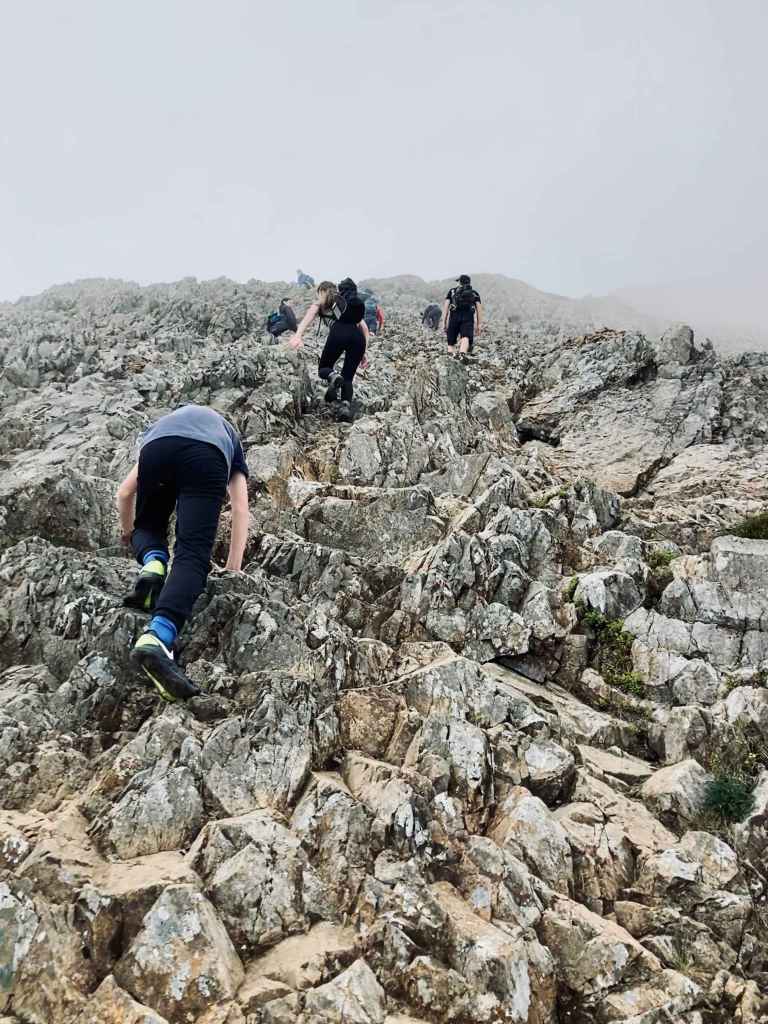
Scrambling involves using your hands as well as your feet to move over rocky ground. It sits between mountain walking and rock climbing, although the boundaries aren’t always obvious.
Some walks include a few rock steps. Other scrambles involve long stretches of steep ground, route-finding and exposure. Exposure means being in a position where a slip could result in a serious fall. How comfortable you feel there is a separate, very personal matter.
A move can be physically straightforward but intimidating because of what’s below it. Equally, a high step can be awkward without feeling especially exposed. Those are different kinds of difficulty, and I want to describe both.
Does Grade 1 mean suitable for beginners?
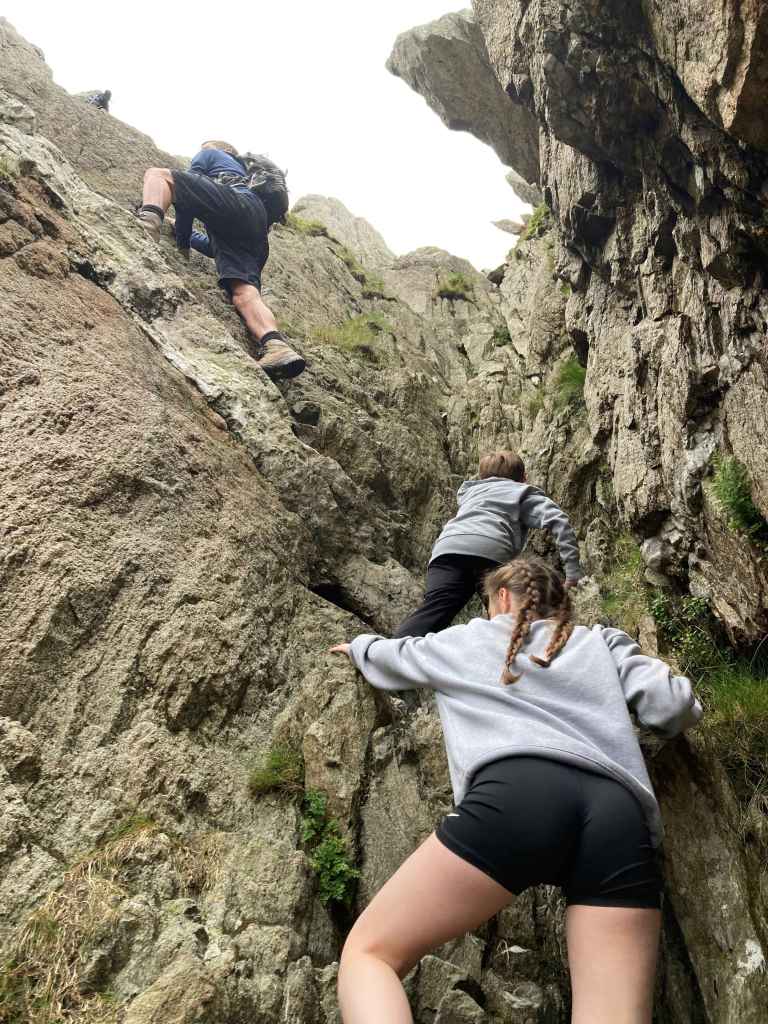
Grade 1 isn’t a guarantee of an easy or low-risk scramble. The overall difficulty also depends on the length, exposure, route-finding, descent and weather.
Before choosing a first scramble, consider your mountain walking experience, your comfort around drops and your ability to recognise the intended line. There often isn’t a clear footpath. Worn rock or scratches may suggest where others have passed, but they aren’t reliable route markers on their own.
If you’re unsure where to begin, an introductory course is worth considering. If I were feeling really nervous, I’d make that investment. Learning with someone who can explain the moves and route choices could open up years of enjoyable scrambling.

Scrambling when you’re short: my perspective
Being 5ft tall is relevant when a description says “just step up”. Sometimes that step is a much bigger stretch for me! A grade can’t tell you how a particular move will feel with your reach or proportions. It’s also so different to being a kid where you have no real sense of mortality and just climb like a mountain goat.
For context, I grew up above a quarry. In those pre-internet days, I spent a lot of time clambering over rocks with my brother and sister. I love climbing: working out the moves feels like solving a puzzle, and I enjoy gaining height as long as I feel securely attached to the rock (solid feet and a hand-hold with no severe exposure)
I’m fairly fit and agile, and generally comfortable with heights, although I’ve had wobbly knees coming down a scramble on a few occasions. My preference is to scramble up and walk down, where the route allows it. I’ve also done a couple of roped climbing courses, although the outings described here were unroped.
That background matters when you read my opinions. What felt manageable to me may feel very different to someone taking their first steps onto steep rock.
Before you try any of these routes: choose the conditions carefully
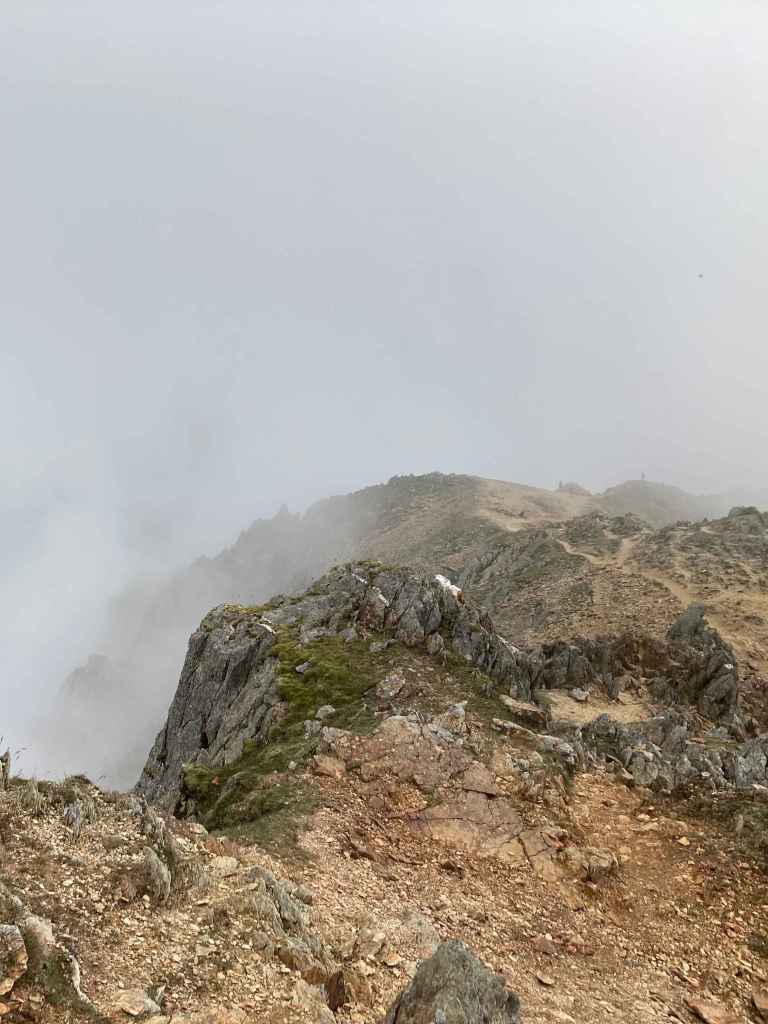
Scrambling in low visibility, on wet rock or in snow and ice is a completely different proposition. If you’re new to scrambling, choose a clear, dry day with good visibility throughout the route, dry rock and light winds. Postpone if those conditions aren’t there. Even in ideal weather, some routes in this article are serious outings, not suitable first attempts.
Low cloud makes identifying the intended line and seeing the terrain ahead harder. Wet rock can make holds slippery, while strong winds can affect your balance. Snow and ice bring winter mountaineering hazards requiring additional skills and equipment. This is not a winter scrambling guide.
A sunny forecast doesn’t guarantee dry, ice-free rock. Recent rain, overnight frost and shaded gullies can leave conditions very different from those in the car park. My Tryfan experience below is a good example of why that distinction matters.
Check a mountain forecast, including visibility, summit winds and gusts, precipitation and freezing level. Reassess what you find on the day, have a lower-level alternative and be prepared to change plans before committing to the scramble.
How I would order a selection of Eryri scrambles
For a possible first taste of using your hands on rock, I would consider the short scrambling section on Cnicht before the other routes here. Among the more substantial scrambles, I found Pen yr Ole Wen the easiest, followed by Daear Ddu on Moel Siabod, then Nantlle Ridge. I would put Crib Goch next, with Bristly Ridge and Tryfan North Ridge at the more physically demanding end of my experience.
That may surprise you if Crib Goch is the one you’re most worried about. I found its scrambling moves less physically demanding than those on Bristly Ridge or Tryfan North Ridge. Its exposure is a separate challenge, and one that could make it the hardest of the lot for someone else.
There’s an important qualification: my Tryfan outing involved ice, so it isn’t a like-for-like comparison with the dry-weather routes. I’ve kept it here because it was one of my most challenging experiences, but I would need to revisit in dry, ice-free conditions to make a fairer comparison.
This is a personal account, not a safety ranking or a recommended progression for beginners. The approach, descent, weather and route-finding all contribute to the difficulty of the complete day.
Eryri scrambles: my personal experiences
1. Cnicht: a possible first little taste of scrambling for unconfident beginners
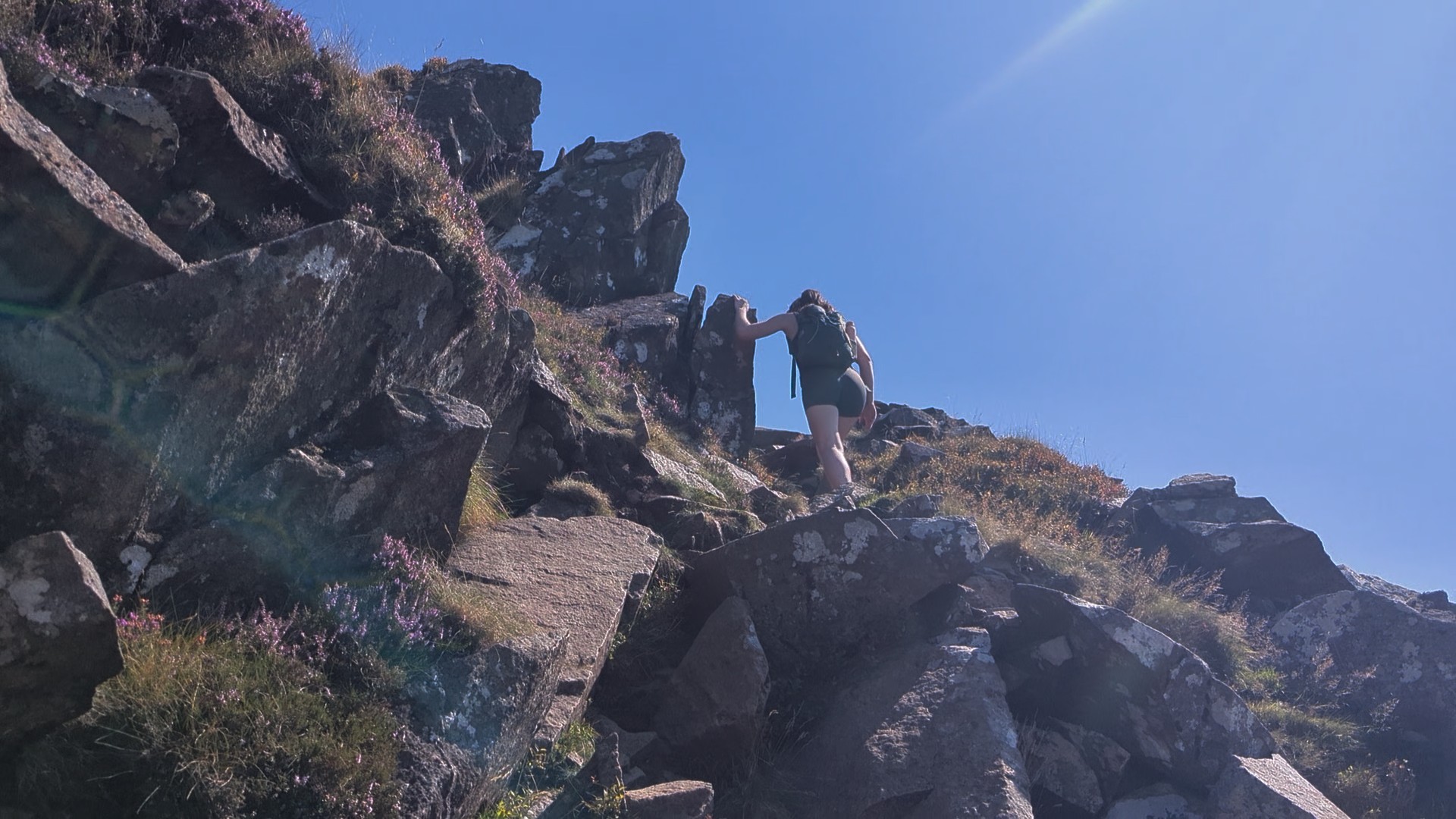
If you’re already comfortable with mountain walking but haven’t tried scrambling, Cnicht is one I’d consider for a first taste. There’s only a small amount of scrambling near the top, so you can experience using your hands on rock as part of a mountain walk rather than tackling a long scrambling ridge.
Some people wouldn’t even call this scrambling, but there’s a short rocky section high on the mountain where you’ll need to use your hands. I’ve included it as a possible first taste because it gives you a chance to build confidence without taking on a long scrambling ridge.
For someone new to scrambling, the approach might look intimidating, but the individual steps become clearer as you get closer. Take your time to look at the rock and work out each move. You might look back at your photographs afterwards and wonder why you felt nervous.
That’s something worth understanding about scrambling: a rocky slope seen as a whole can look much harder than the individual moves turn out to be. Learning to judge those moves, while recognising your own limits, is part of building confidence.
The video below starts at the small scrambly section at the top of Cnicht
2. Pen yr Ole Wen Scramble via Cwm Lloer – good for building confidence
On my visit, the scrambling section was pretty short, just 15 minutes and consisted mainly of rock steps interspersed with a narrow path. I was already experienced at scrambling, and it was a sunny May day with little wind, I found it very straightforward.
This video will open at the scrambling section of this route:
I didn’t feel exposed to precipitous drops on the line I took, but someone with less experience could find it daunting looking up and wondering if it’s the right route. Recognising the intended route is a really important part of scrambling.
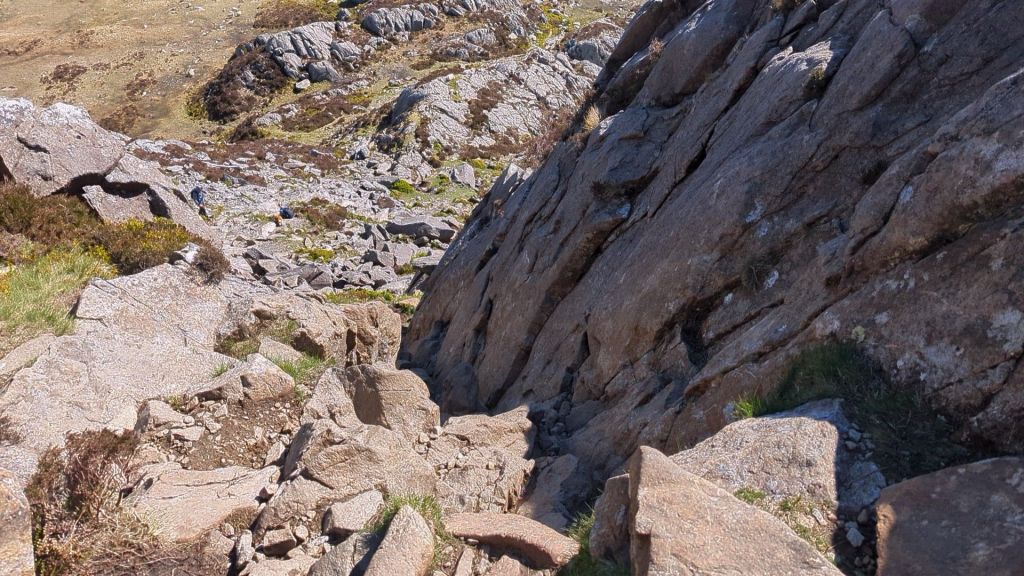
My linked circular walk includes an off-path descent from Carnedd Dafydd near steep ground. Don’t treat the short scrambling section as a measure of how straightforward the whole circuit is.
3. Daear Ddu Ridge, Moel Siabod: choosing your line
I would put Daear Ddu after Pen yr Ole Wen and before Nantlle Ridge. On the line I took, there was a mixture of walking and sections where I needed my hands.
For me, much of the challenge was taking time to decide between different ways over the rock. That’s where experience helps: recognising the intended ridge route rather than drifting onto ground that looks tempting but may be more difficult.
The video below will start at the scramble section:
4. Nantlle Ridge: manageable moves, but some serious drops
Before walking Nantlle Ridge, I searched for footage showing the actual scrambling. I wanted enough detail to judge whether I could take Ziggy, but I didn’t find much that answered my questions.
I approached it with the intention of stopping before any move I didn’t feel we could reverse. That’s probably one of the best pieces of advice if you’re trying a route for the first time – you know your own limits.
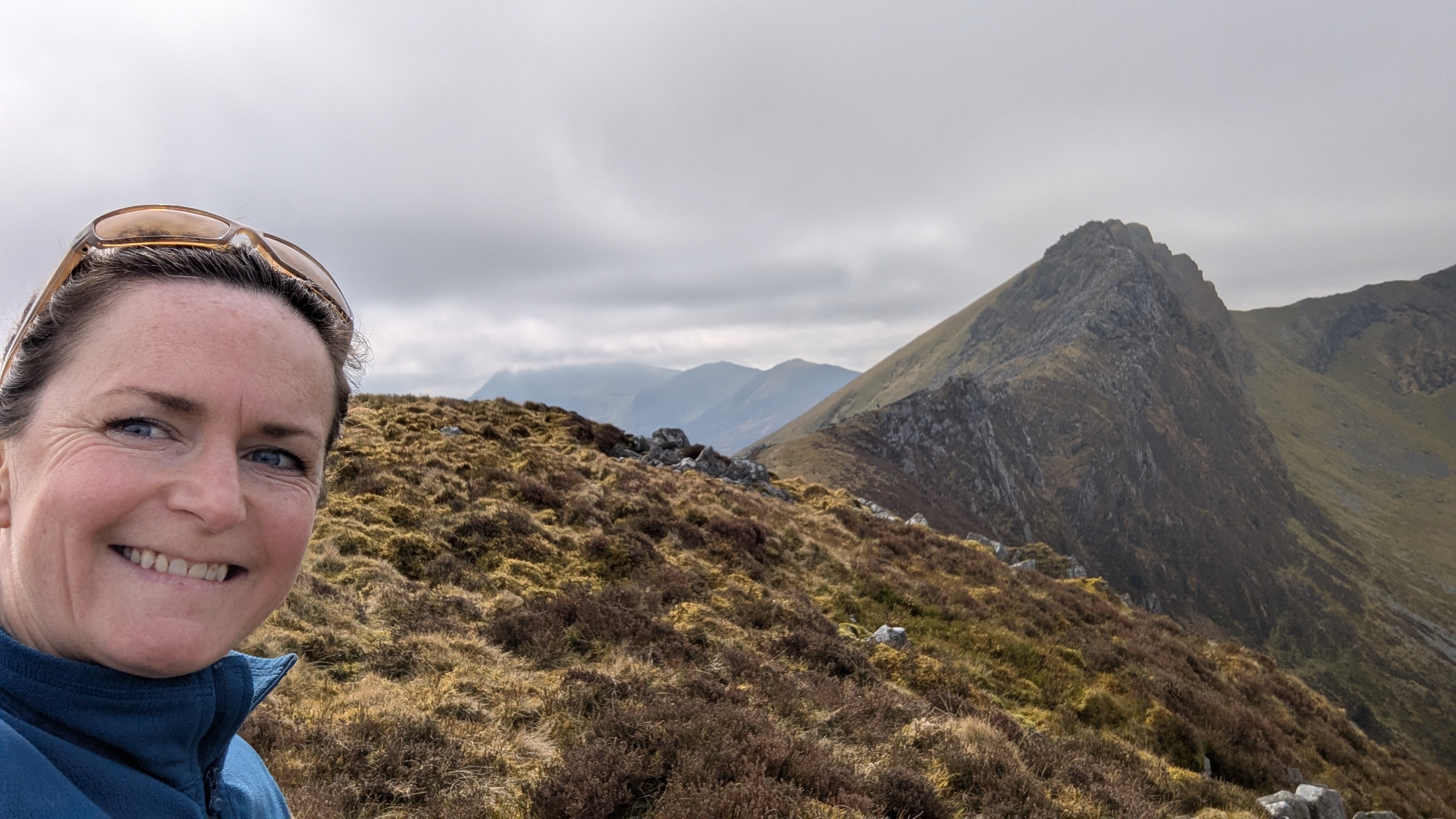
At my height, I found the one short pull-up I encountered manageable although I did have to give Ziggy an encouraging push.
I found Nantlle noticeably trickier and more intimidating than Daear Ddu. There are serious drops along the ridge so strong winds, ice or poor visibility would change the experience substantially.
The video starts at the scramble:
5. Crib Goch: why I didn’t find it the most physically difficult
Crib Goch has a reputation that can make it feel like the ultimate test. But if you ask me which of these scrambles was hardest physically, I would put Bristly Ridge and my experience on Tryfan North Ridge above it in physical and mental effort.
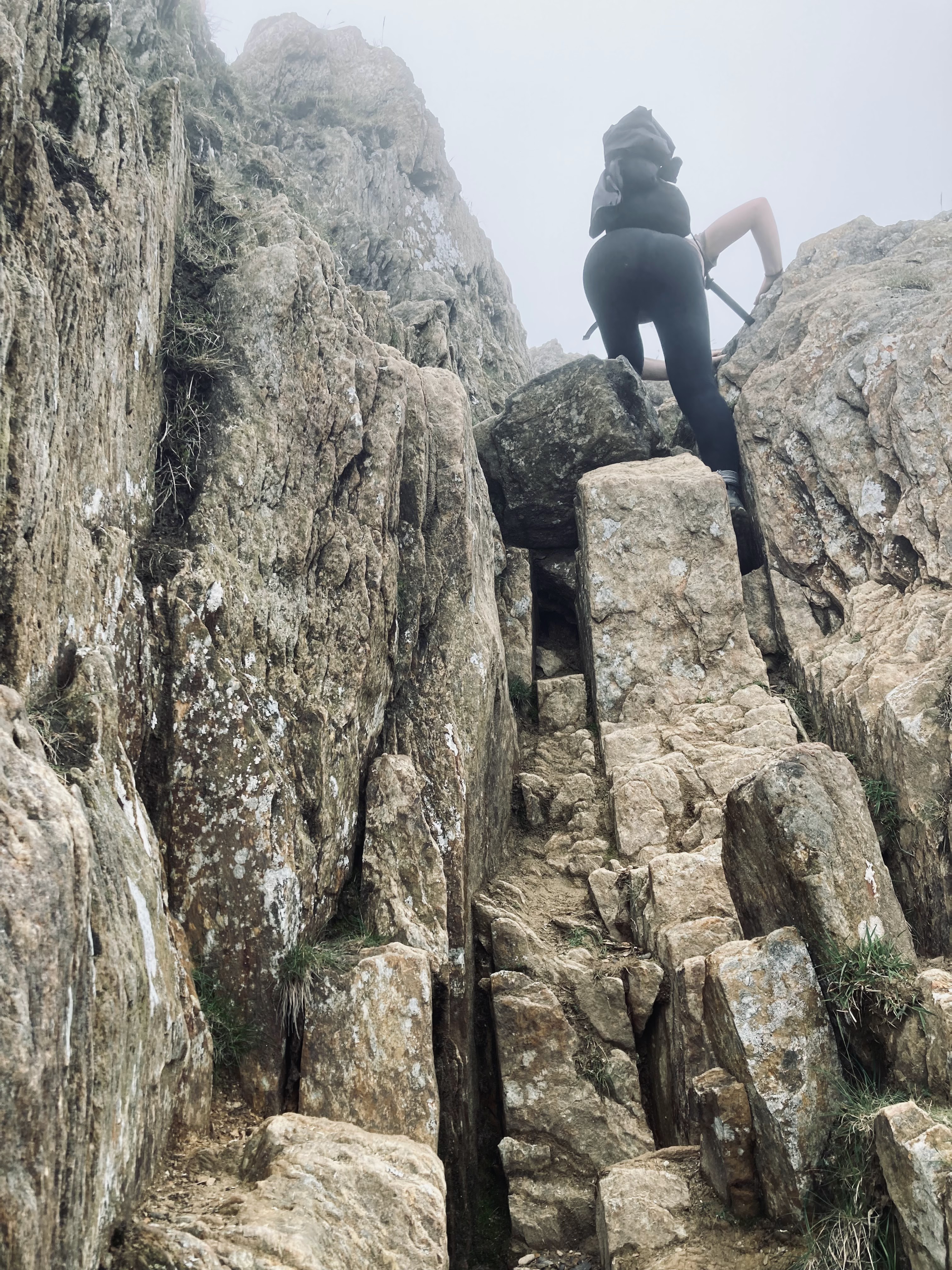
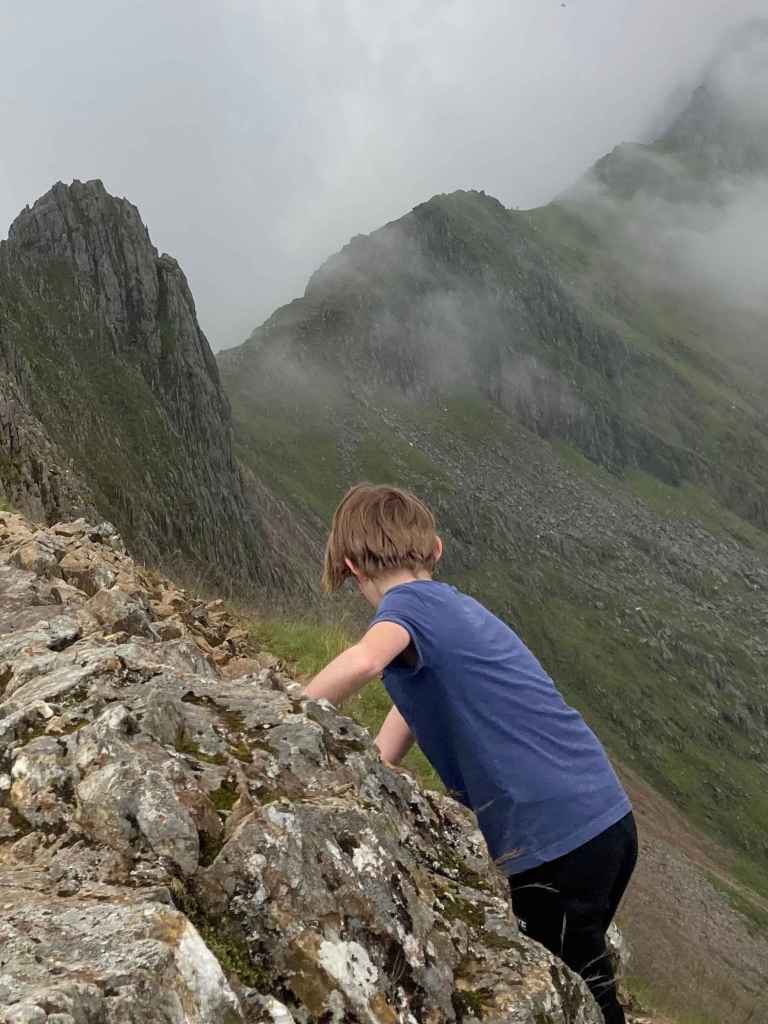
That doesn’t mean I found Crib Goch easy. The first steep section, scrambling up onto the ridge, is pretty intimidating in itself – that’s before you get the precipitous drops on the ridge that you will have seen so many photos of.
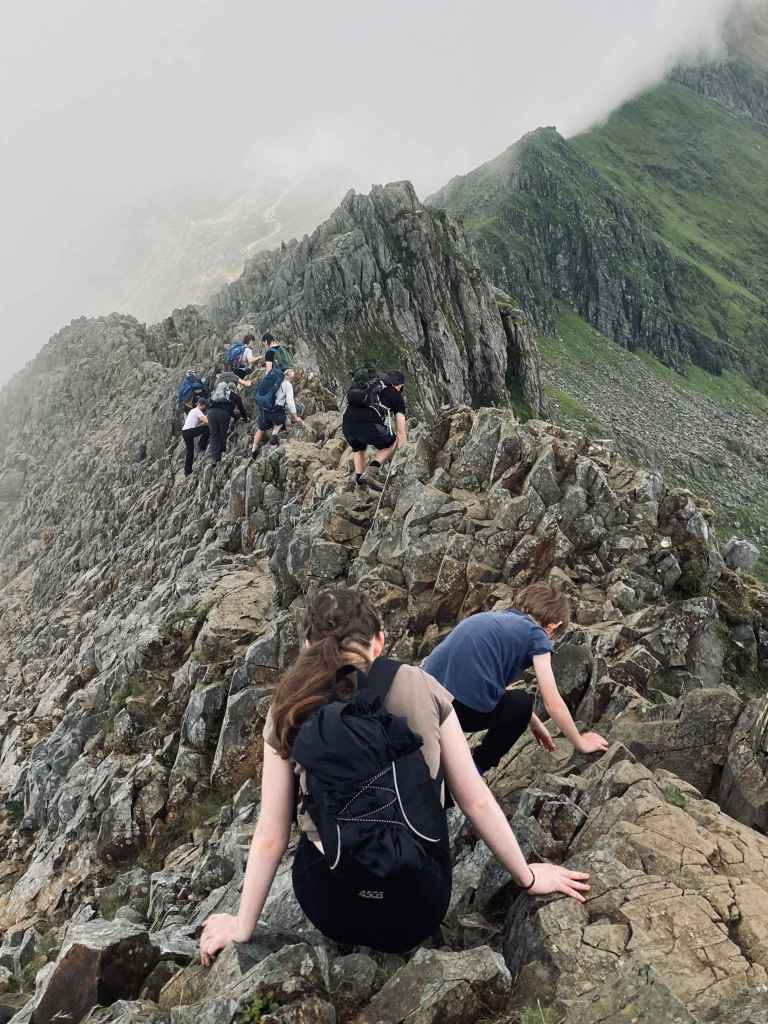
When I last did it, quite a few years ago, I was with my children (11 and 15 at the time). I’d also done it as a child with my family. That familiarity gave me confidence, although I’m very aware that a childhood memory isn’t a substitute for properly assessing a route, I’m certainly much more cautious than when I was a child/teen.
I chose a reasonably clear summer day and went with a friend I trusted to help if the children needed it. I think taking children into the mountains is fine but having a proportionate amount of responsible adults is a good idea.
On the day, they were like little mountain goats. I remember reminding them about three points of contact while they watched other people happily walking across. Maternal instinct certainly kicks in on a narrow ridge and you can’t afford to trip up on this ridge.
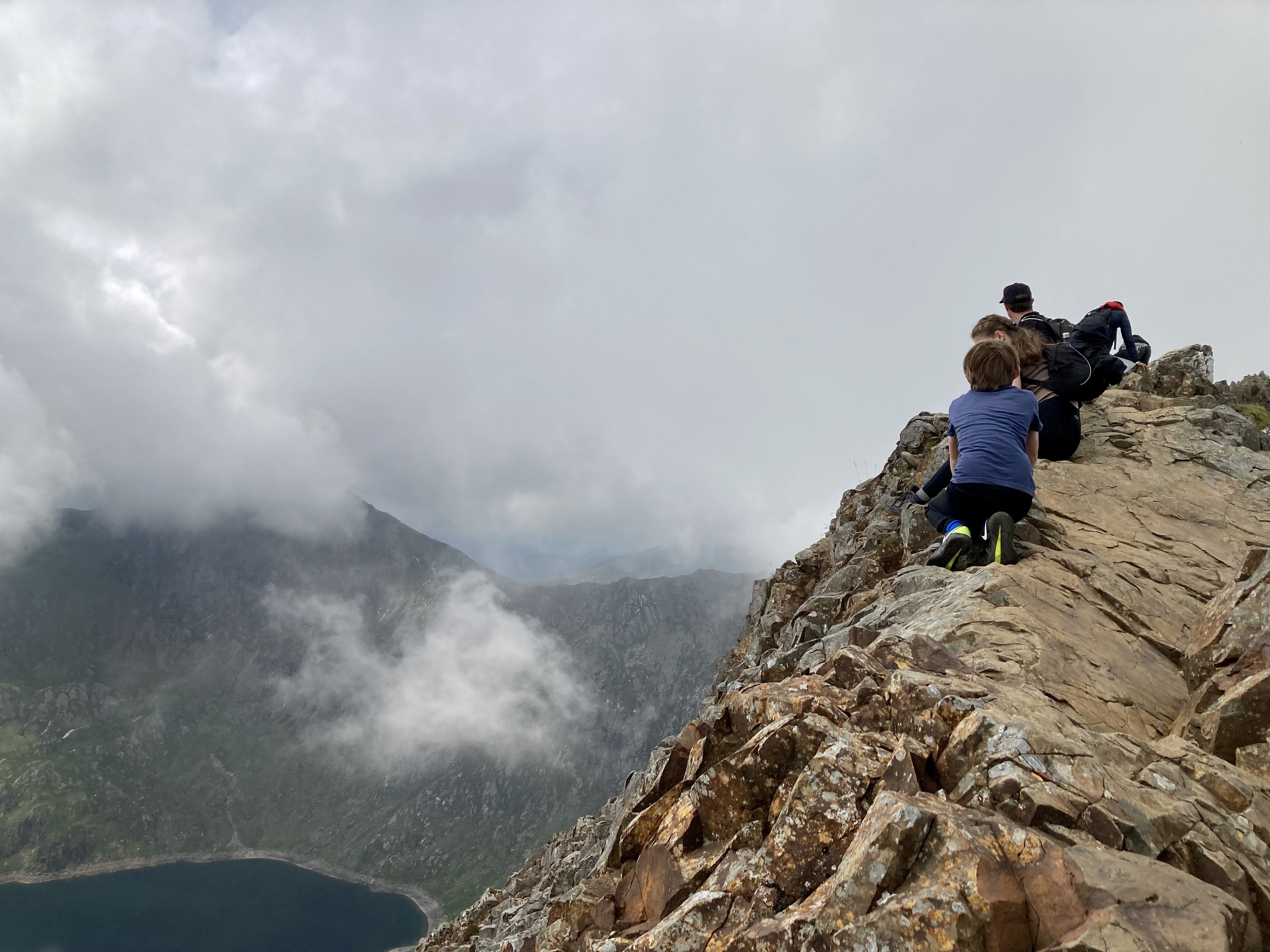
For me, the distinction is between the physical moves and being on exposed ground. Someone who is comfortable climbing rock steps but uncomfortable beside steep drops could find this the most difficult route here. The exposure is serious, however confident you feel.

The ridge also goes on much longer than a short Instagram clip might suggest, and it includes downclimbing and a scramble up to the ridge too, although there’s no exposure to the steep drops on that section.
If looking over steep drops makes you feel dizzy or causes you to freeze, I wouldn’t choose Crib Goch.
Finding it less physically demanding doesn’t make it a suitable first scramble. What I found was in relatively clear conditions there was an obvious clear sense of where to go next and that is part of what makes scrambling this route just a little bit easier.
6. Bristly Ridge: physical effort and route-finding
Bristly Ridge is one of the more physically challenging scrambles in this comparison for me. There’s exposure to manage in places, as well as the effort of moving over the rock.
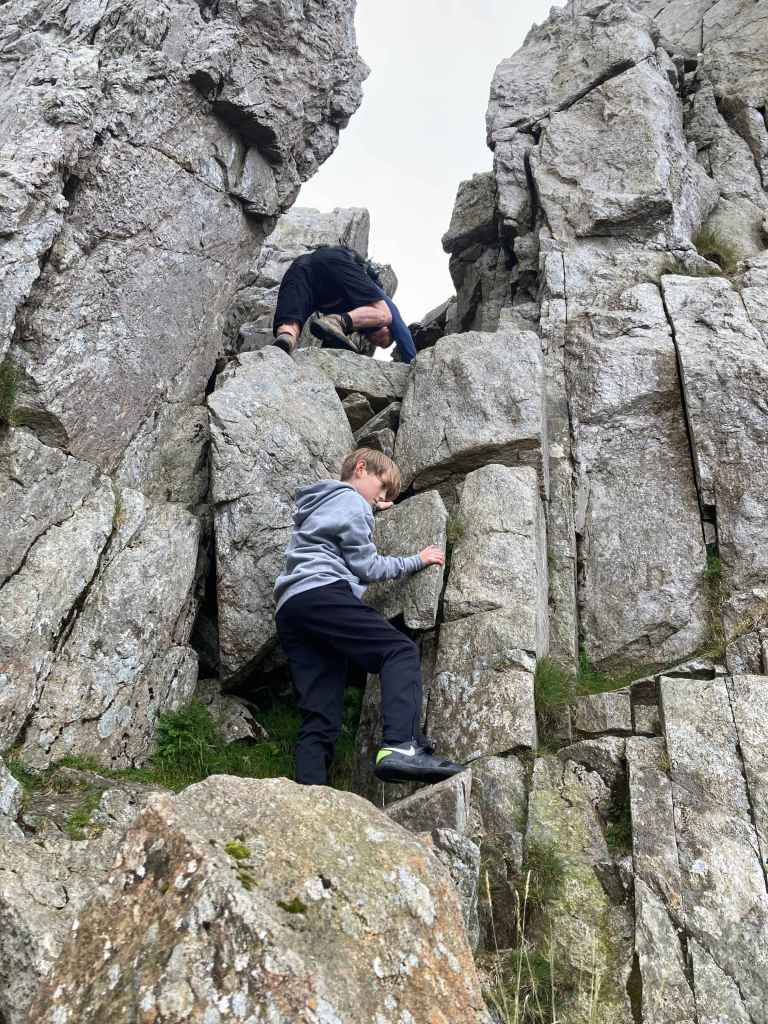
On the outing described in my guide below, we went slowly in good weather and chose our line carefully. At 5ft and with my kids who were shorter at the time, we all easily managed without help. Some of the downclimbing felt more awkward than Sinister Gully itself, which is useful to know when you’re trying to picture the whole scramble.
Managing it without help doesn’t mean it felt easy. Both the physical demands and the route-finding put it above Crib Goch in my personal experience.
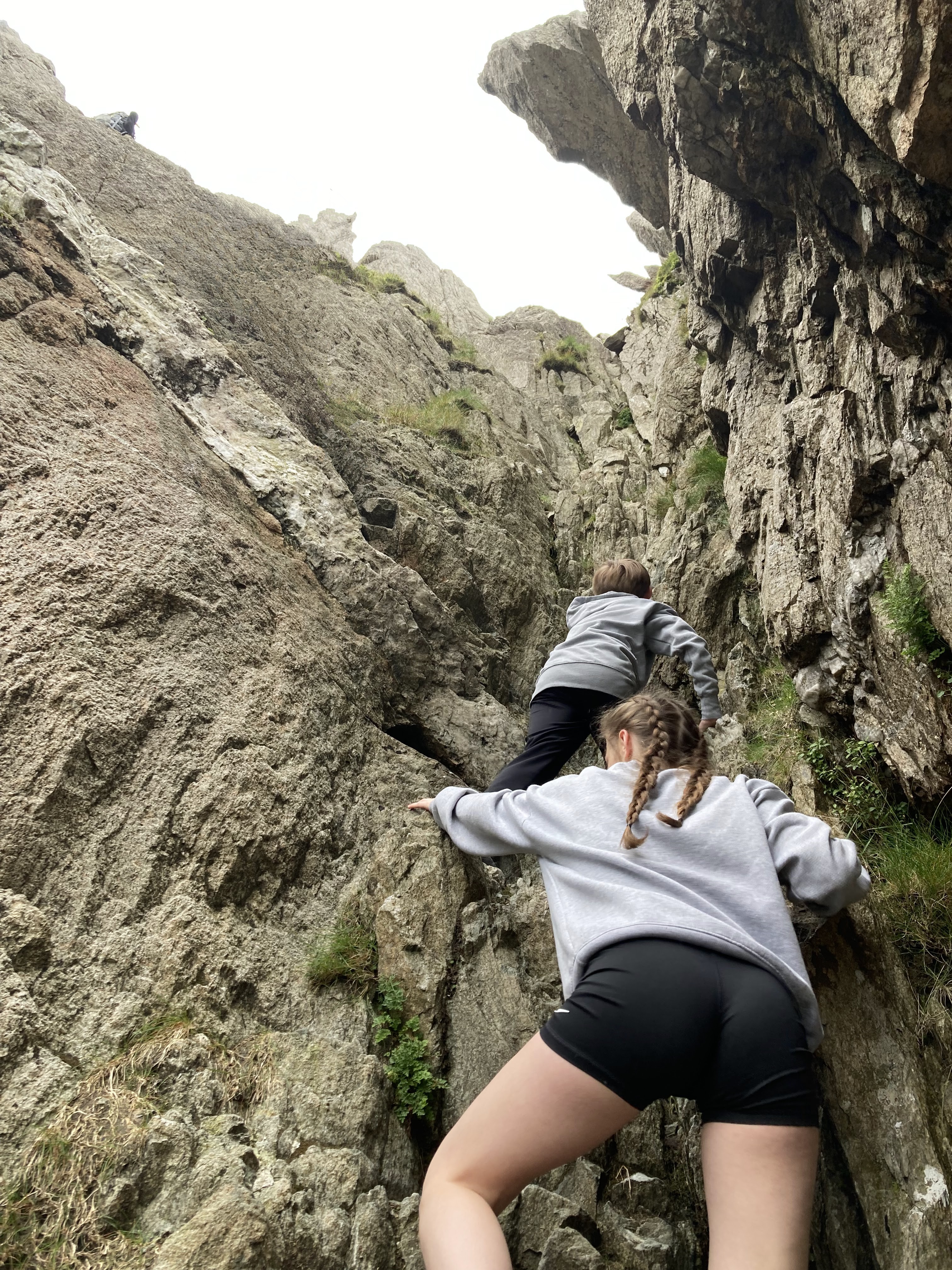
My young son and teenage daughter managed it comfortably, but there were still places where I wasn’t sure we were on the intended line. That added a lot of stress. I found the way ahead clearer on Crib Goch, although that certainly doesn’t mean route-finding there can be taken for granted.
My biggest worry on a scramble is getting into a pickle and finding I can’t reverse the moves. Bristly Ridge made me think carefully about that.
I don’t have a video for this one, but my guide has plenty of photographs and more detail – it’s a fantastic circular walk and on the day if conditions aren’t great you can avoid Bristly Ridge.
7. Tryfan North Ridge: my toughest scramble, but it was a bit icy!

I put Tryfan North Ridge alongside Bristly Ridge at the demanding end of my experience. But the conditions need explaining before I make that comparison. The North Ridge is a scramble pretty much all the way up – there is an easier route up the opposite side but that does involve some very rocky terrain too – but it would be best for a complete beginner.
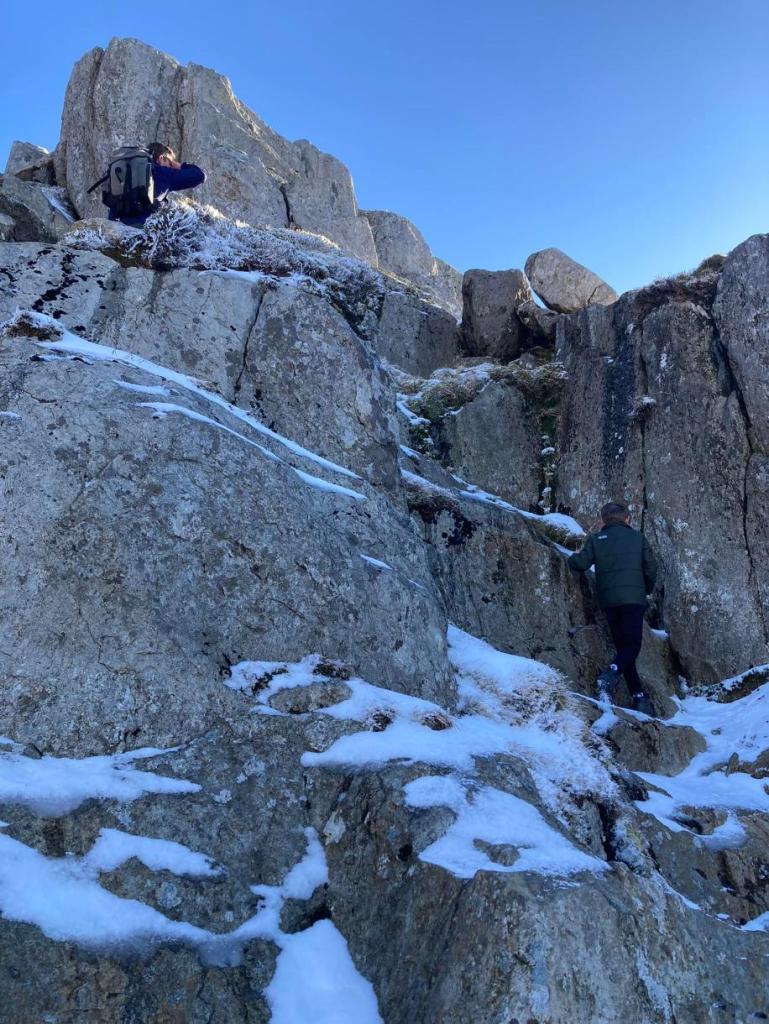
We went on a lovely sunny March morning. The North Ridge was in deep shade and the rock was icy. A bright day had not given us the conditions I’d expected. This was a lesson in checking the ground conditions, not just looking at the sunshine.
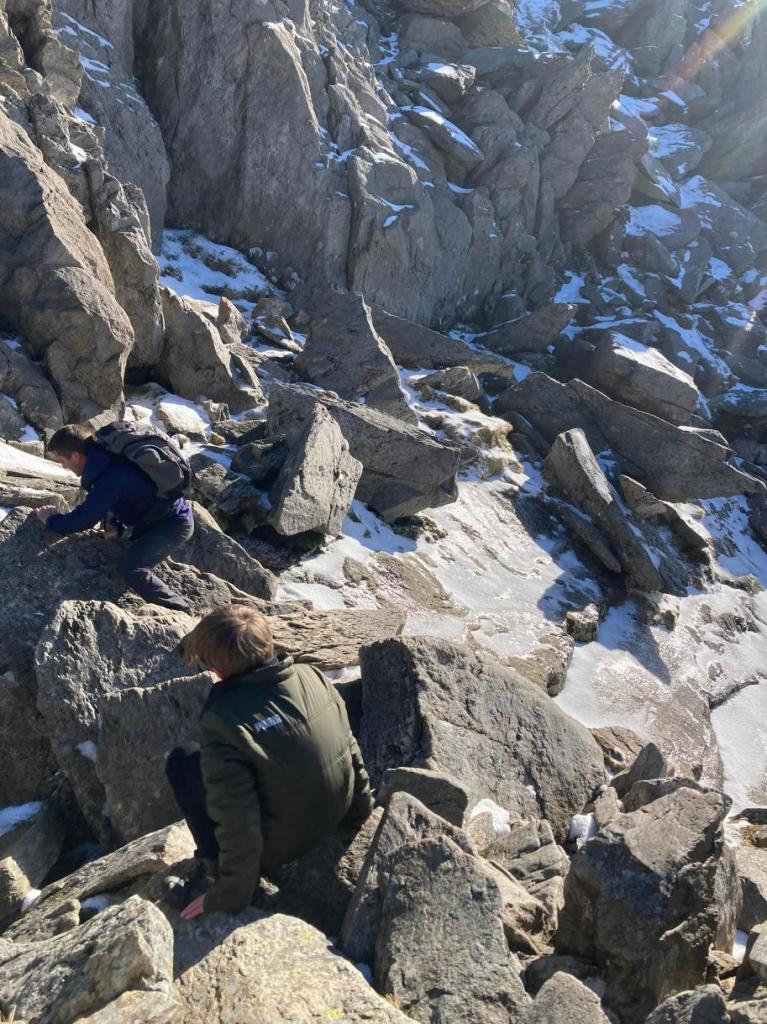
For us, it was around three hours of scrambling and thinking hard about where to go next before we finally climbed onto the summit. I found it the most challenging of these outings. There is no path up this route – you have to pick and choose as you go.
When I watch people returning to the route and moving over it confidently, I wonder how much of my experience came down to our choice of line and how much was the ice. We may have chosen harder moves in places, but I can’t separate that from the conditions with confidence – it may just have been nerves because of the ice.
I’d like to return in summer on dry, ice-free rock. Until then, this is an account of a difficult day, so perhaps not a fair verdict on how a dry Tryfan North Ridge compares with the others – but a good lesson was learned by me on that day about shade and ice.
For a beginner, encountering ice is a reason to change plans before committing to the scrambling. My experience is a reminder of why the weather caveat near the start of this article matters.
Is Crib Goch harder than Tryfan or Bristly Ridge?
I’ve added this question in because I think people are genuinely trying to work out how they will find a route based on context of other scrambles they may have tried. My answer depends on what you mean by harder. I found Bristly Ridge more physically demanding, and Tryfan North Ridge was harder still, although ice affected that experience. Crib Goch’s exposure could make it much more challenging for someone who is uncomfortable with heights but the route finding was easier as it’s so much more popular.
You can’t really compare them unless you climb them all on the same day. So much depends on the line you take, the group you’re with, the conditions and what you personally find difficult.
Should you take a scrambling course?
If you don’t have experienced companions who know the terrain and can support a beginner, I’d recommend a course with an appropriately qualified instructor.
That first experience gives you context when people compare routes. I find those conversations useful, even when people disagree. Once you know what a particular scramble felt like to you, the descriptions of others make more sense.
Go with an appropriately qualified instructor – check their credentials and reviews (I recommend Max Adventures he’s a qualified winter mountain leader and I’ve done a few courses with him)
Before you choose your first scramble
I know this is common sense, but… Choose for the conditions and your current experience. Research the approach and descent as carefully as the scrambling, check a mountain forecast, and carry suitable footwear, clothing, navigation and emergency equipment. Make sure you have enough daylight to complete the route.

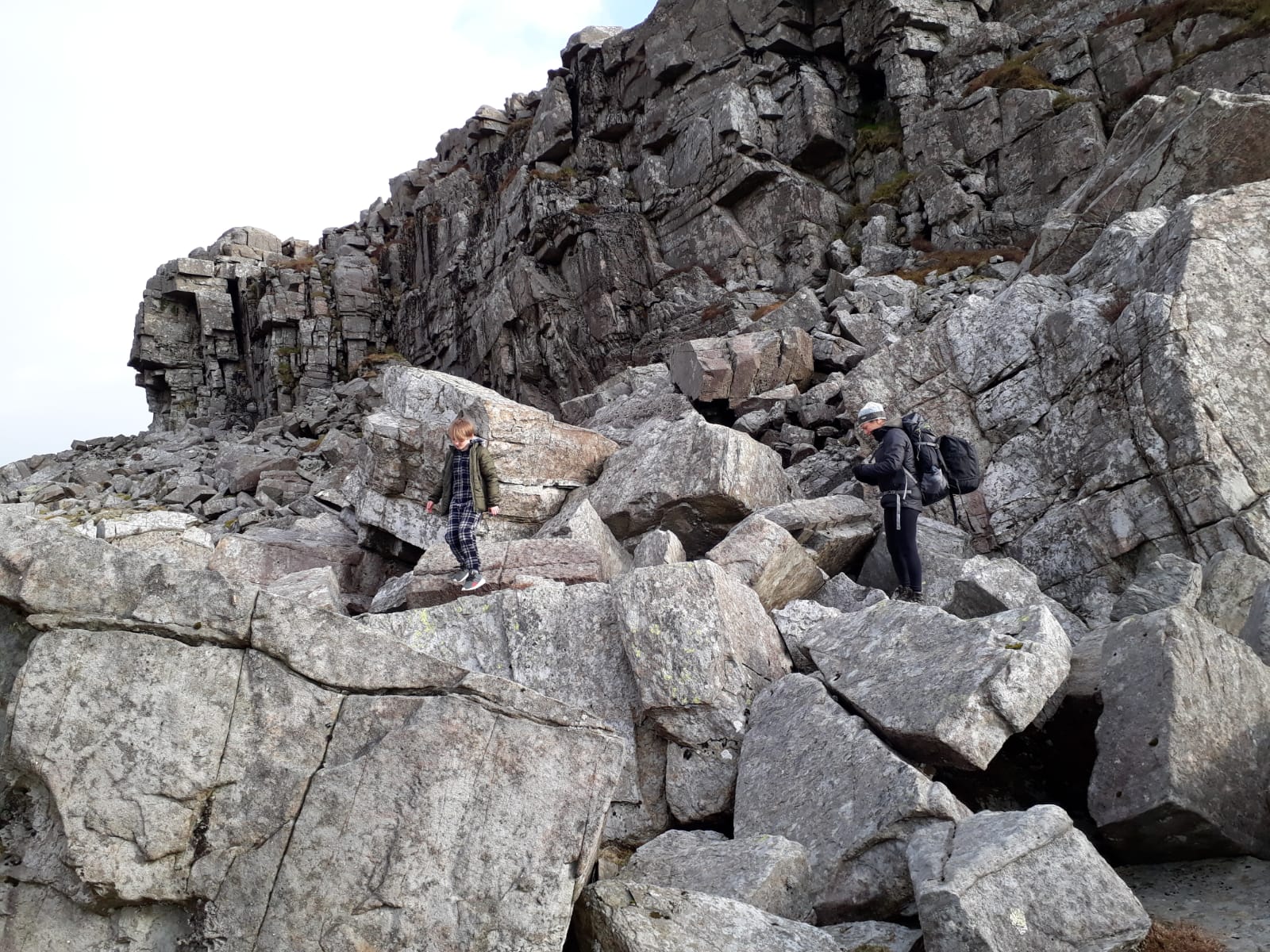
For a beginner, a clear, dry day with dry rock, good visibility and light winds is the starting point. You want a day like the pic above! If conditions are wet, icy or unclear, choose another day or a more suitable walk. Revisit my North Wales mountain weather guide before setting out.
Please remember – there’s no need to start with Crib Goch. Give yourself time to get used to moving over rock on suitable terrain before taking on more exposed routes.
Have you tried any of these scrambles? I’d love to hear which route, or particular section, you found most awkward.
Hilary
Leave a Reply