
Here are a few tips for hiking with dogs in the mountains and hills. I’ve put the quantity of water as the first point as I think it’s probably the most important to get right.
Water – How much water should you take for your dog on a hike?
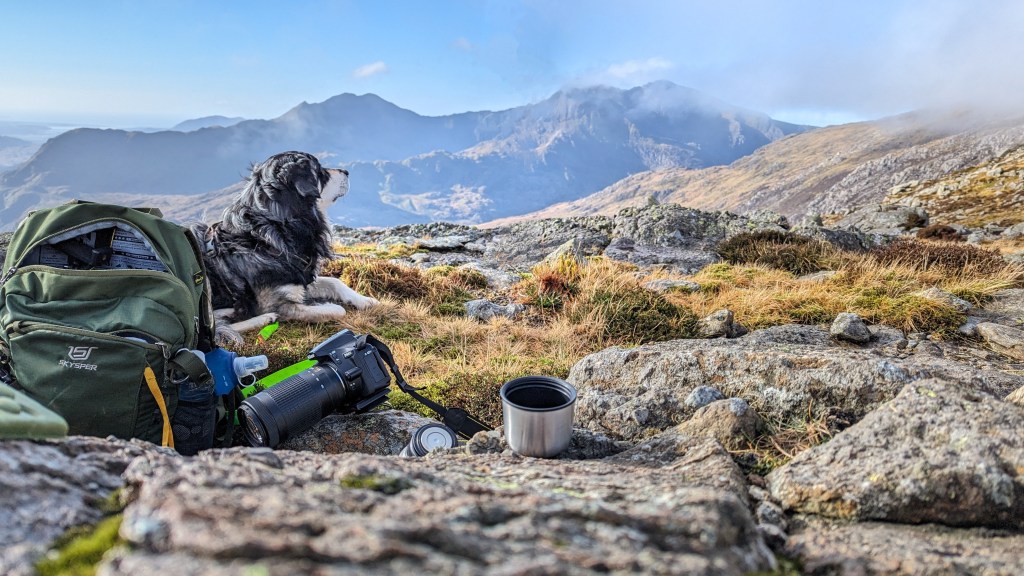
Generally I take as much water for Ziggy as I do for myself – he’s on a lead so he’s not running around. If your dog is ok off the lead they may need more.
There’s a calculation whereby you should provide 50ml of water per kilo of dog. My dog Ziggy is around 30 kilos so on a normal day he should be drinking 1.5 litres of water in total. My terrier is under 10 kilos, so she should need much less in a day, just half a litre.
For an average 6hr walk I usually take a bladder pack with a litre of water for me and and a litre for Ziggy – it’s easiest if you split the dogs water into two smaller bottles.

You need to adjust the amount of water depending on how hot it is. If you think the day is going to be so hot that you’re worried the weight of the extra water will be too much then you should probably choose a different day to go with your dog or be 100% sure of the water sources available on your route. I’ve turned back from a route becasue it was so hot we’d got through most of the water I had in the first few hours of a 7hr walk. Keep an eye on how much you have throughout the walk.
Ziggy has a thick coat (great for winter hikes!) so it’s unfair on him to expect him to hike in the heat of summer. Leave early or late, have you heard the song Only Mad Dogs and English Men Go Out in the Midday Sun.
Just do something different instead. For example this summer I’m planning to pick off more low-level lake or coastal walks on hot days so we can enjoy a swim and keep cool – I’d rather do that than leave my dog behind!
Is it ok for Dogs to Drink from Streams and Lakes?
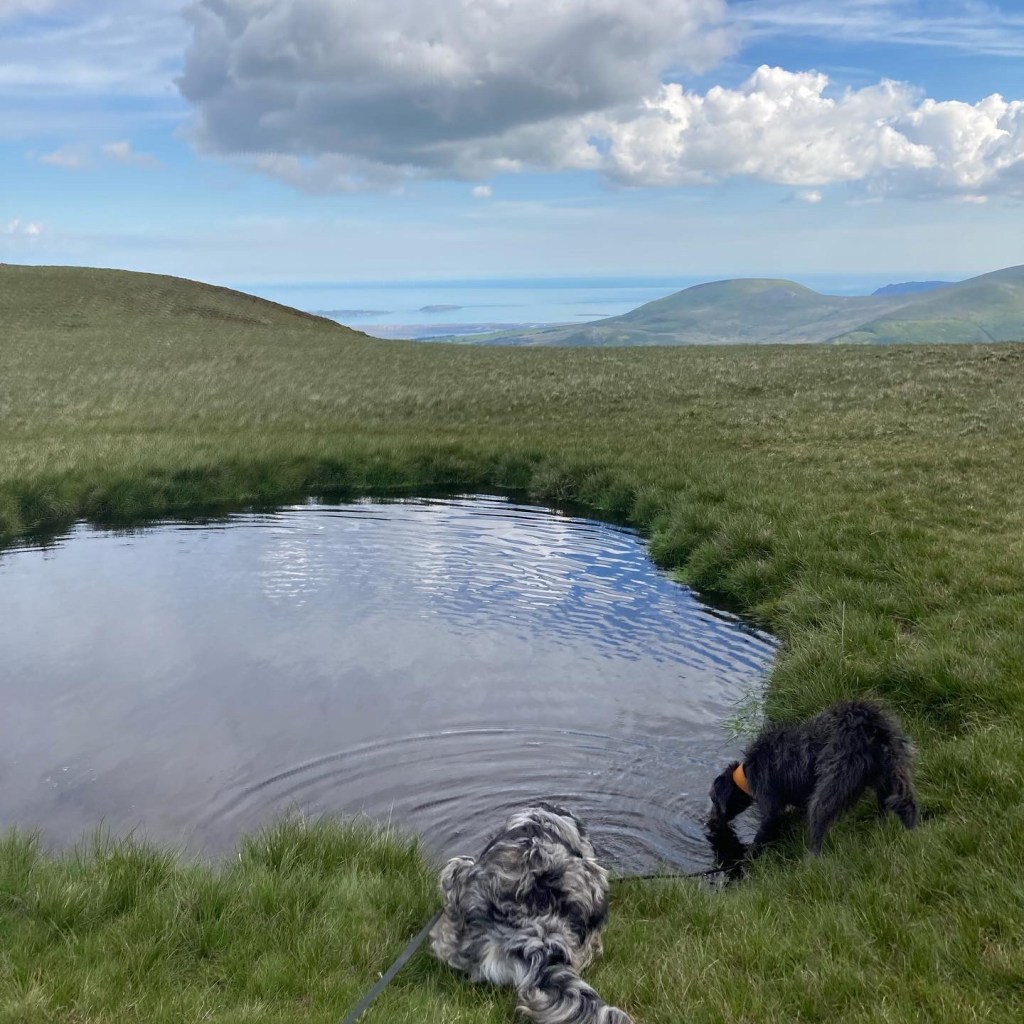
Often I come back with water as there are plenty of lakes and streams dogs can drink from. Running water up high in the mountains will be clean and safe for your dog to drink in most cases – keep away from stagnant water, and an eye on signs that mention Blue Algae or other reasons your dog should not swim or drink the water.
Lowland natural water has more potential to be polluted. Do some local research or just ensure you have enough safe bottled water. You can also get sterilisation tablets but in my experience my dog has never been adversely impacted by drinking fresh water on mountain hikes.

It’s worth checking for water on the map, you can refill bottles for your dog then as well as letting your dog drink directly. Make sure you check the map contours, you might look really close to a lake but it’s actually 300 ft below the path!
Is My Dog Capable of Hiking Up A Mountain?

Physical Condition, Size and Age
Ensure your dog is in good physical condition and suited for long walks/hikes (ie not fat and slow!). Most breeds of dogs are capable of walking long distances and managing ascents and sescents. Most dogs in fact are more sure footed, and can walk and run better and faster than humans irrelevant of size.
You Know Your Dog Best!
If you’ve never taken your dog on a days mountain hike before it’s worth building up to it. I started with short walks when Ziggy was a puppy, vets advise not to go for more than an hour when they are pups. I used it as an opportunity to check out the start or end of lots of hiking routes I had my eye on.

A good way to check fitness and stamina would be to slowly build up from 1hr walks keeping an eye on how your dog is towards the end of the walk and how they recover.
My 13 year old terrier for example has a stamina these days of just a few hours, she really slows down in that last 30 minutes and really anything more than an hour then the next day she will be stiff. As a guage I watch how well she navigates our stairs the next day, after a longer walk she takes the stairs very slowly. She can jump in and out of the car and run on the beach but steep hills seem to give her aches the next day. If you have any advice on supplements for a dogs joints, do let me know!
Pre-hike Health Check for Your Dog
It’s probably too obvious to even mention but make sure your dog is not limping or in any way behaving differently to usual – you don’t want to have to call mountain rescue to help you carry a dog off a hillside. If your dog’s healthy and you’ve checked their paws then there’s no reason they shouldn’t enjoy a day in the mountains too.
List of what to bring when hiking with your dog
Lead
Harness
Bowl
Food
Water
Snacks/Treats
Dog Poo Bags
First Aid Kit (you should bring one whether you have a dog or not!)
Blanket/Towel
Dog Rain Coat (if very wet)
Post-hike Health Check
Other than the general care you would normally give your dog, keep a look out for ticks! Nasty blood sucking ticks are lurking in long grass. Keep checking for a few days after. Just stroke your dog looking out for these little nasties. When you remove them you need to make sure you get their head and legs which burrow into the skin. Tweezers are useful if you can stomach it, best to give your dog flea and tick tablets to help avoid them, you should still check though as some are very determined!
The RSPCA has some great advice for removing ticks – RSPCA Advice for Dog Ticks
Can Your Dog Get Over a Stile?

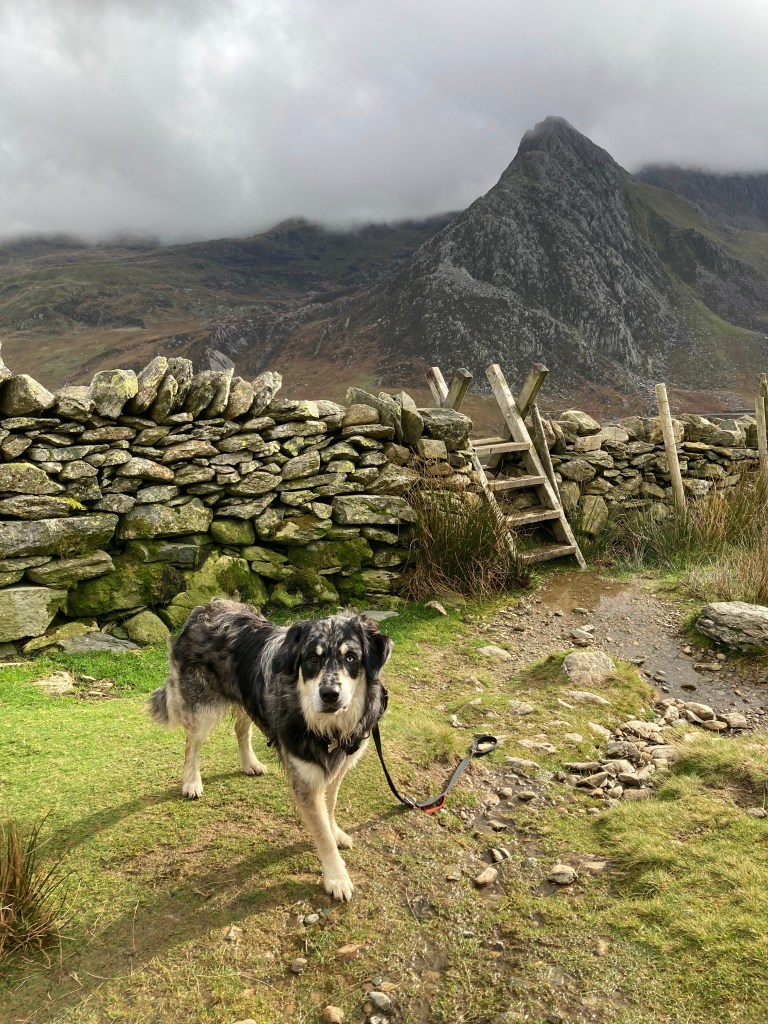
This is probably one of the biggest considerations if you have a dog you can’t pick up. I trained Ziggy in getting over stiles from a young age and he absolutely loves them, he sees them and starts pulling on the lead – it’s like a child who’s seen a climbing frame ahead.
I have been asked to put details of stiles in all of my route guides, to be honest most walks I do include stiles and usually multiple varieties. If I ever find a walk that only has kissing gates then I will make note of that for people who’s dogs can’t or can no longer get over a stile.

Whilst eating a sandwich by a wall I watched a group of walkers heading up Moel Siabod lift up the bottom of a fence in order to get their big (very overweight) husky breed through it. There’s was a perfectly good wooden farm stile, but the dog had no idea how to get over it or inclination to try and between the four of them none of them could lift it over. It took two of them pulling up the fence to the side so the dog could squeeze under – they then made an attempt to push the wire of the fence back down but walked off leaving it still curled up and not fully fixed – this is unnacceptable and probably a criminal offence!
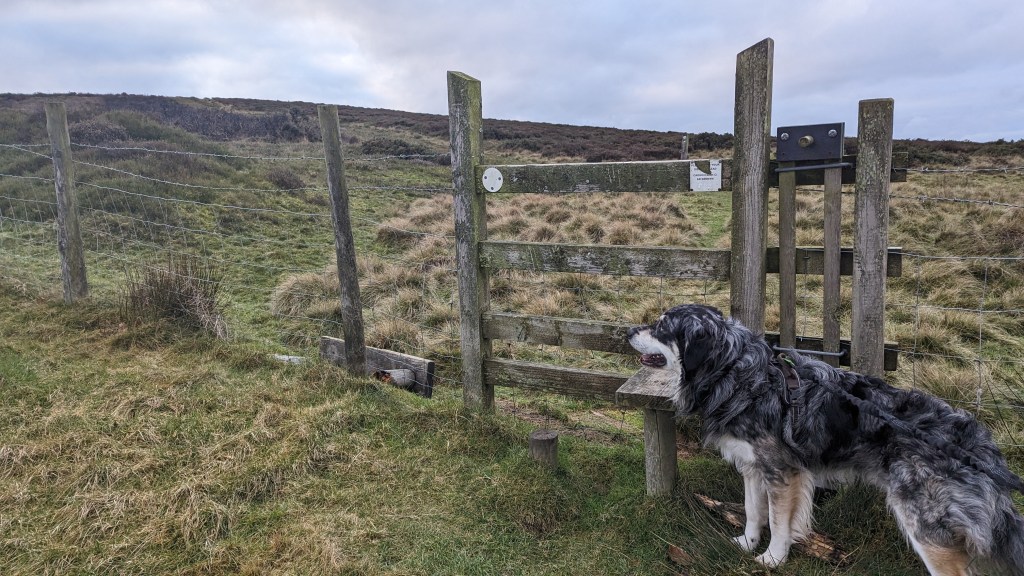
If the reason your dog can’t get over a stile is not age, then my advice would be to find a local stile and practice! If it’s because they are overweight then moutain walking may need to wait until they are a bit fitter anyway.
Leads and Harnesses for Hiking with Dogs
I keep my dogs on the lead at ALL times when I’m in the hills and mountains because of livestock.

There’s no reason to spend a fortune on anything special, but I would recommend using a hands free dog lead with a waist loop (mine is similar to the one above) as this will leave you hands free whilst ensuring you can disconnect yourself really easily should your dog get tangled up or you’re on a tricky scramble.
Ziggy is a large dog so he also has a harness with a handle on so I can keep him close and firmly in hand should we pass newborn livestock or have to pass people on a narrow path. With a small dog you could just pick them up if needed, so it’s less of an issue!
Bring a Spare Lead!
Check your leads and harnesses before you go! I have had the awful experience of a lead snapping as Ziggy lurched after seeing a ewe start running off. It was pretty horrific as he chased the sheep off at speed and whilst he came back a minute or so later, it reinforced to me that I should always have him on the lead and that I should always check his leads and harnesses before we go as well as bring a spare lead.

Having a spare lead is good advice even if your lead is the sturdiest money can buy as if you come across a loose dog you can secure it easily.
How Much Food to Take for Your Dog on a Hike
Just take what they would normally eat during the day and then some decent treats. Again, you know your dog best, so i wouldn’t give them anything they have never tried before incase it upsets their stomach.
I usually take a bag with my dogs usual dry food in it and offer it to him when I stop to eat myself. Little packs of cold sausages make great protein packed rewards for your dog. They are doing more activity than usual so I wouldn’t worry about giving them extra special treats they wouldn’t normally get on a walk, just nothing new to them.
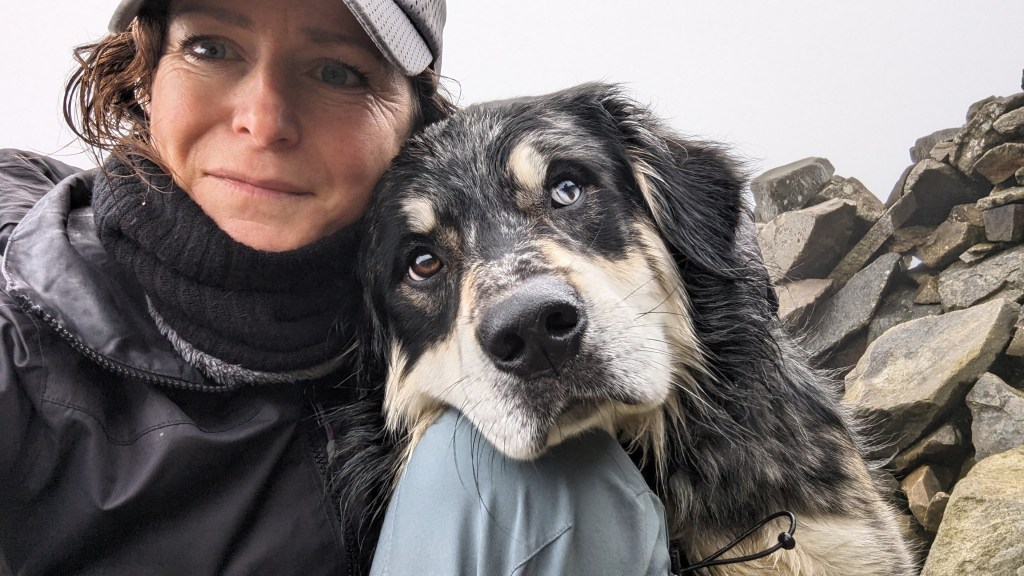
I hope you’ve enjoyed the pictures of my dogs. I follow quite a few hikers with dogs on Instagram. It’s great to see people getting out in the hills and mountains with all kinds of breeds of dogs. Let me know in the comments if you get out in the mountains with your dog and if you share your adventures let me know where I can find and follow!


Leave a Reply