

The Morfa Madryn Nature Reserve is a lovely place for a walk in North Wales and I thoroughly recommend a visit. The nature reserve is tucked beside a stretch of the North Wales Coast Path, and it offers a brilliant habitat for a huge variety of birds.

There’s a circular walk around the reserve with plenty of signs to keep you on track, so I don’t think you’ll need a GPX file or OS Maps for this lovely little walk which will take around an hour.
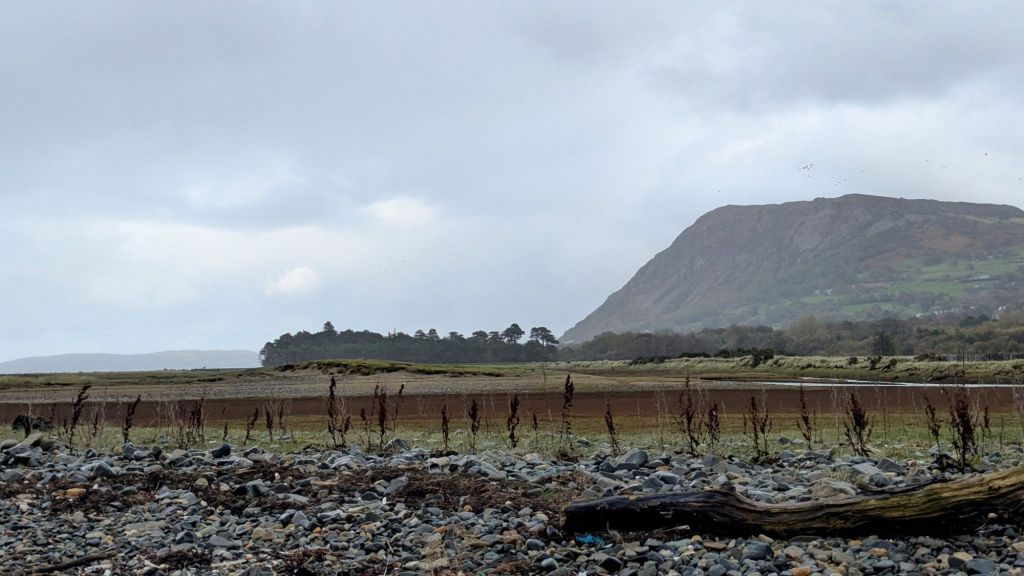
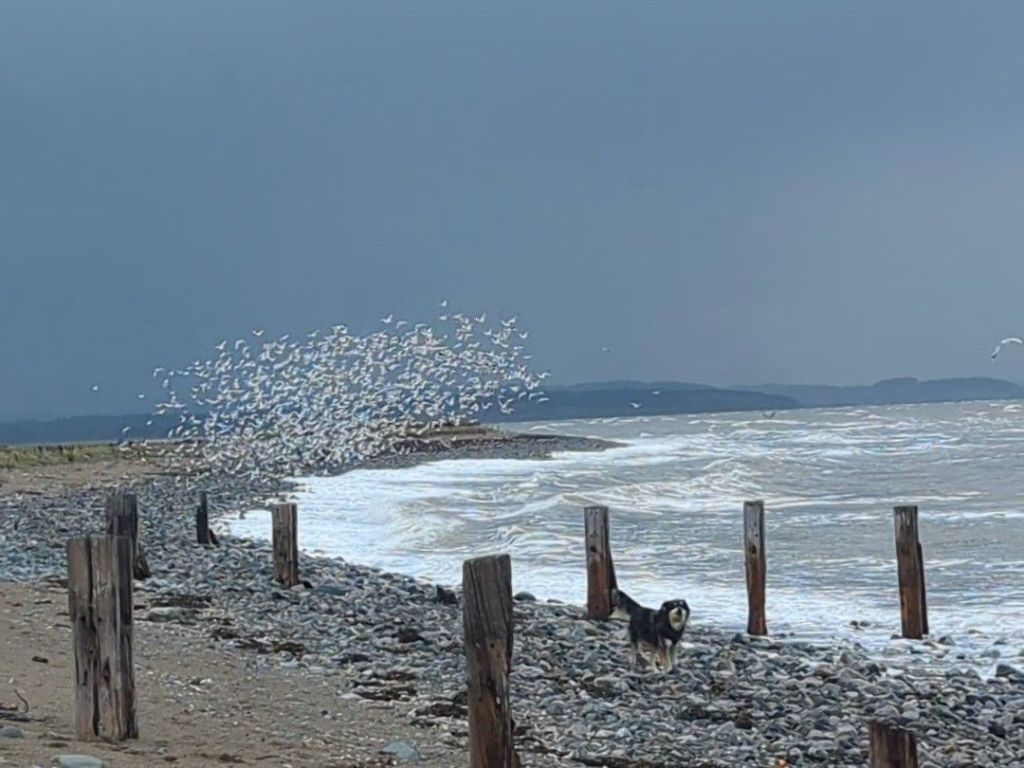
While I might not be a dedicated birdwatcher (yet!), I was absolutely captivated by the sheer number of seabirds around. Walking along the shingle spit at Glan y Môr Elias, I came across a massive roost of Oystercatchers.

The Oyster Catchers were all huddled up, preening their feathers, clearly waiting for the tide to drop. As I walked past they flew up and then quickly resettled. I think they were trying to shelter from the same wind and rain that had chased me off the mountains!
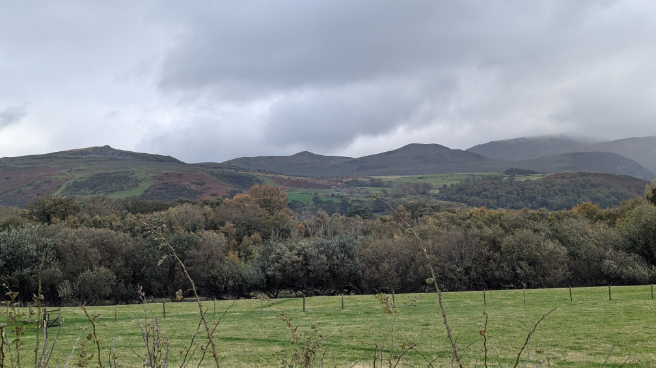
My original goal was to get up into the lower Carneddau mountains behind Llanfairfechan, but when the clouds turned black and the downpours got increasingly heavy, I decided to swap the rugged heights for a more gentle walk along the North Wales Coast Path.

I’d spotted this little reserve from a number of walks in the hills previously so when I was deciding how to rescue the day I immediately thought of Morfa Madryn.
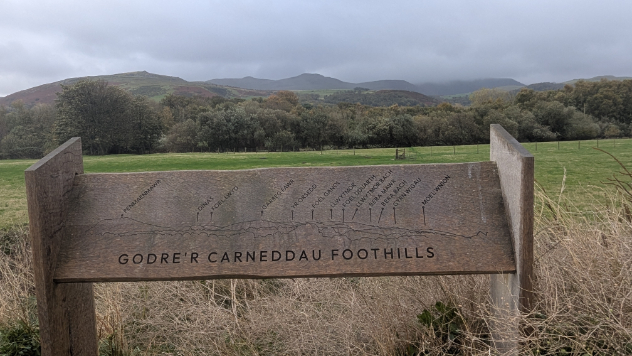
On the path I found a great sign post that showed all the shapes of the lower Carneddau, and seeing those black clouds swallowing the summits again just confirmed I’d made the right call. The mountains will wait, but a peaceful stroll by the sea, watching the wildlife, was the perfect alternative. Especially as I was treated to a little rainbow over Puffin Island.

Where to Park for Morfa Madryn Nature Reserve
There’s a large pay and display car park on the promenade at Llanfairfechan which is well signposted. Just follow signs to the beach once you come off the A55. The reserve is to the left of the car park when facing the sea

Handy information for anyone planning a visit to this lovely coastal walk in Llanfairfechan
Morfa Madryn Nature Reserve: Quick FAQs
Q: Can I let my dog off the lead at Morfa Madryn Nature Reserve
A: Yes, but between May and September you’re asked to keep it under close control on the lead as the area will be full of ground nesting birds and dogs can be a disturbance for these. I walked in late October along the shingle spit as Ziggy loves to get into the sea. He wasn’t interested in chasing any birds, he’s always laser focused on his ball.
Q: Where exactly is the Morfa Madryn Nature Reserve?
A: The reserve is located along the coast near Llanfairfechan in North Wales. You can access it by following the Wales Coast Path for about a mile to the west from the Llanfairfechan promenade.
Q: What kind of habitat is Morfa Madryn?
A: It’s a wonderful mix of wetland habitats, primarily featuring coastal pasture, freshwater pools, reed beds, and some small woodland areas. It’s designed as a disturbance-free area for birds to feed, rest, and breed.
Q: Are there places to watch the birds at Morfa Madryn Nature Reserve?
A: Yes! The reserve is equipped with three bird-watching hides that are strategically placed to give you excellent views of the different habitats and the birds that use them. There is ramped access to the hides from the path.
Q: Is the reserve easy to walk around?
A: The path leading to the reserve from the Llanfairfechan promenade is a well-surfaced path, though it may change to compacted gravel towards the Glan y Môr Elias coastal marshland. Once at the reserve, the path narrows a little.
Q: Is it close to other important nature sites?
A: Yes. Morfa Madryn, along with Glan y Môr Elias, is part of a Local Nature Reserve. It also adjoins the vast Traeth Lafan mudflats, which are internationally important for their birdlife, particularly wildfowl and waders.
Q: What kind of birds can I see at Morfa Madryn Nature Reserve
A: At Morfa Madryn Nature Reserve, you can spot a variety of waterfowl, waders, and birds of prey, including species like mallard, wigeon, teal, pintail, shelduck, and little egret. You may also see redshank, dunlin, oystercatcher, and various gulls, while the area is also good for seeing birds of prey such as the red kite and peregrine falcon.




Leave a Reply